Gear Review: ATK HY Free 13 Binding
This year I took the new ATK HY Free 13 bindings to Japan for 2.5 weeks of backcountry skiing in Hokkaido, after my Shift bindings escaped after dropping a cliff (one popped off and scampered down the mountain). Here’s how the ATK HY 13 held up against everything Hokkaido could throw at it.
Quick Binding History
I’ve been chasing the right balance of touring capability and downhill performance for a while now, slowly shifting more and more to touring:
- Look Pivots - My first setup. Fantastic alpine feel, obviously no touring ability
- Dynafits - My introduction to touring. Classic and lightweight, but the power transfer, elasticity, and stability just wasn’t there compared to what I was used to with the Pivots. Pins sacrifice too much of what makes rocking deep powder fun.
- Original Shifts - Got these the first year they came out and immediately swapped out my Pivots. These were exactly the binding I was looking for: raw downhill power transfer with real feel on the mountain, plus the ability to tour up. I loved them.
I ended up skiing the Shifts for about 7 incredible years. My first ski trip to Japan, on the last day of 14 straight days of powder, I dropped a 15ft cliff and one of my Shifts released. The culprit was a known AFD plate issue that plagued the first release (the Shift2 was specifically redesigned to fix this). The day before, I’d stepped out of my ski in the trees without realizing the AFD had self-adjusted, and on that cliff drop, the binding released and my ski escaped down the mountain. Luckily it was close to the end of the season, so I had all year to decide on my next setup.
ATK HY vs. Shift2
Lucky me, the ATK HY Free 13 was announced shortly after my Shift binding ran away. ATK is a legit backcountry brand with some great bindings, and this was their first foray into hybrid style, so I was excited but wary. The Shift2 had also just come out and is an iteration on the original with that AFD issue specifically fixed. My heart wanted the ATK HY, but I wanted some hard data to back it up.
| Spec | ATK HY 13 | Shift2 13 |
|---|---|---|
| Weight (per binding) | 675g | 900g |
| Weight (pair) | 1,350g | 1,800g |
| Release Range | 6-13 | 6-13 (DIN) |
| Construction | All metal: 7075 aluminum & stainless steel | Carbon-infused PA, aluminum & steel |
| Riser Heights | 2 + negative flat (-18mm, +10mm, +42mm) | 1 + flat |
| Sole Length Adjustment | 25mm | 30mm |
| Brake Widths | 97, 108, 120mm | 90, 100, 110, 120mm |
| TÜV/DIN Certified | No (designed to pass) | Yes |
| Boot Compatibility | ISO 9523 / GripWalk | Multi-Norm (MNC) |
| Price | ~$950 | ~$680 |
The ATK is significantly lighter, about 225g less per binding and 450g less per pair. Research on energy expenditure shows that a pound on your feet costs roughly the same as five pounds on your back, and on a long tour with thousands of vertical feet, that 450g savings adds up fast.
The all-metal construction also stood out to me. The Shift uses carbon-infused polyamide in the toe, which is fine for resort use but makes me nervous grinding through couloirs and over exposed rock. The ATK is 7075 aluminum and stainless steel all the way through.
The riser situation also favors the ATK. Three positions (including a negative flat at -18mm) vs the Shift2’s single riser plus flat. More riser options means better ergonomics across varied terrain, especially in stiffer touring boots where heel height really matters.
The trade-off was less toe elasticity compared to the Shift and no DIN certification (yet), though ATK says it’s designed to pass.
What worried me was the higher touring profile. I spend time on volcanoes that get icy near the summit, and more height means more leverage working against you on edge. I was also confused by the negative incline in normal walk mode, wondering how that would feel touring.
Ultimately I had to make a call with not much real-world information (the ATK HY only hit the market in the 25/26 season). I decided to trust ATK’s design decisions and go with their more backcountry-focused binding.
Back in Hokkaido
Naturally I had to head straight back to Japan to test out the ATK HYs. The main objective of the trip was Asahidake, a still-active volcano in the center of Hokkaido that offers some of the most stunning backcountry skiing in the world.
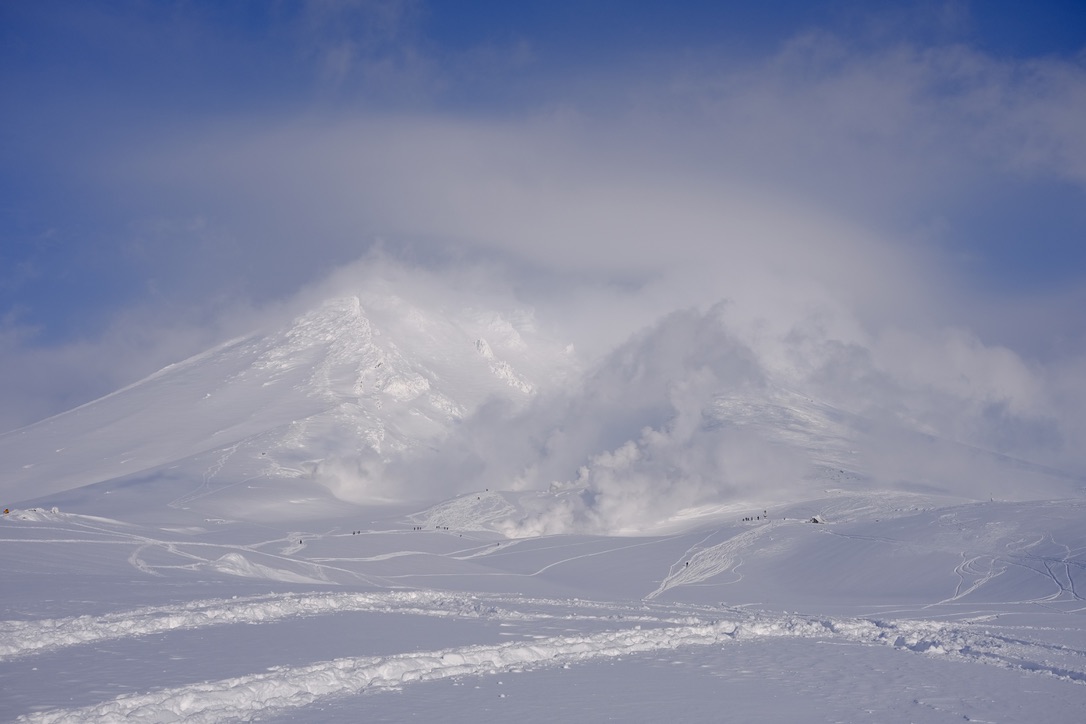
We made two attempts. The first time we headed up in whiteout conditions, counting on a weather window appearing in a few hours. It didn’t. We got to ski back down in 60 mph gusts. Two days later we went again and got a bluebird day with a meter of the lightest powder I’ve ever skied. The snowflakes coming down were at least 3 centimeters in diameter, making for incredibly fluffy snow. I was on 112mm underfoot skis with rocker spoons, floating above it all.
Touring Performance
On the flats, the negative incline heel position gives you a longer, more natural stride that helps you glide along. I really noticed it on our long approaches. It’s a bit of a calf stretch until you get used to it, so there’s a medium-level riser to bring you back to flat. Having three riser options (vs the Shift’s two) meant I could dial in the right heel height for each section of the skin track instead of just toggling between flat and high.
On the steeps, I was able to skin straight to the top, unlike almost everyone else on the mountain who booted the last kilometer. I felt totally safe with my pins locking me in completely, even on icy slopes near the summit where I was up on my edges. That was my biggest concern going in, and it turned out to be a non-issue. The pins stayed locked and transferred power directly into the skis, despite being raised higher than normal toe pins. No pin elasticity like I’d experienced on Marker Kingpins or the original Shifts.
The Shift, by contrast, is a bulky touring platform. It has more moving parts in the toe collecting ice and snow, and the toe piece’s range of motion is limited compared to dedicated pin bindings. The Shift is a resort binding that can tour, not a touring binding that can ski resort. The ATK HY flips that equation.
Downhill Performance
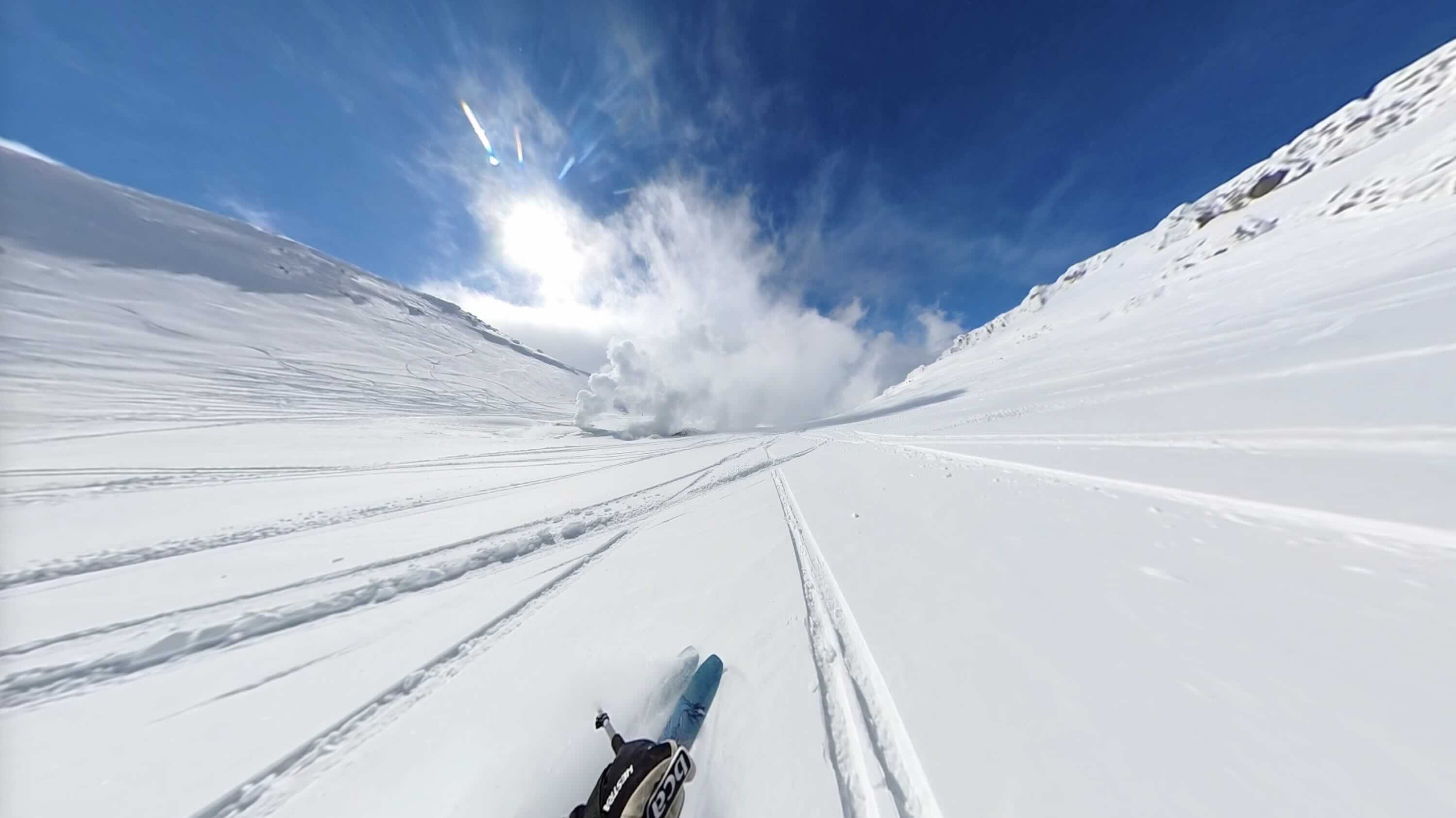
Coming off the summit in alpine mode, I was totally locked in. My boots sat close to the ski and I could feel and react to everything smoothly. The winds from the days before had left deep powder pockets but also scoured sections of the upper mountain. I could feel the transition between snow conditions immediately (great transfer with the bindings) and adjust my skiing safely, never feeling wobbly or out of control.
Once we hit the powder field I leaned into the bindings even more. Rocketing down, feeling the skis bounce with me and react immediately, gliding through turns and slashing corners. At no point did I feel disconnected or jello-y from the skis. The bindings kept me totally connected to the mountain.
On another peak later in the trip, I hit a hidden ice block buried in the powder (after dropping a little ledge) and double ejected. The release was silky smooth and even though I went flying I was totally safe. I also had leashes attaching me to the bindings so they couldn’t escape this time. After the Shift AFD incident that had me chasing a ski down the mountain, having a clean, predictable release (with leashes) gave me complete confidence in these bindings. DIN certified or not, they do exactly what they’re supposed to do when things go wrong.
The Transition System
Another area the ATK really shines. The system is really simple:
The heel always acts as a normal heel, it just flips up and down. The toe piece rotates 90° around a horizontal axis. When the toe is vertical, you’re in tour mode and a lever at the front separates the pins so you can clip in. To switch to ski mode, lift that lever, pop out your toe, kick the toe piece forward so it goes horizontal, tuck your boot beneath it, and stomp in your heel. Totally locked.
To go back to touring, pop the heel, kick the toe piece back to vertical, press the lever, and pin back in. The heel piece never moves.
This is way better than my experience with the Shifts, and I was always fully transitioned before the rest of the group. The Shift heel piece has to slide forward and back during transitions and it gets icy, hard to move, and often fails to lock. The Shift also has a spring-loaded brake lock lever that releases with surprising force: enough to hurt your hand if you’re not using a pole tip to disengage it.
The only annoyance on the ATK HY was snow occasionally packing into the toe piece and blocking it from rotating into tour position, but a quick wipe always fixed that. Way less fiddly than the Shift’s multi-step transition dance.
The Verdict
I’d call the ATK HY a 70% backcountry, 30% resort binding. The Shift is more like 30% backcountry, 70% resort.
Minor gripes:
- Standard ATK ski leash attachments don’t fit the HY. I had to rig my own attachment point with some paracord.
- Snow in the toe piece occasionally requires a quick wipe before transitioning.
- No DIN certification yet, though when I got them the shop tested the release thresholds with the same equipment they use for DIN-certified bindings and they were right on spec.
- Pricier than the Shift2 at ~$950 vs ~$680.
What I loved:
- Significantly lighter, noticeable over long tours.
- All-metal construction feels bomber even on rugged terrain.
- Transitions are faster and more reliable than the Shift.
- Excellent power transfer and downhill feel for a touring binding.
- Negative heel position in touring mode for natural stride on flats.
Who Should Buy What
Get the ATK HY Free 13 if you’re someone who wants to charge hard in the backcountry. If you go out for beautiful views but also to ski hard, to get that downhill-style responsiveness and really push your skis, this is your binding. It’s built for people who are committed to touring and want a binding that can keep up when things get steep and technical. If more than half your days are earned turns, this is the one.
Get the Shift2 if you’re spending more time at the resort and want the option to tour occasionally. They’re cheaper, DIN certified, work with alpine boots, and give you true resort-level step-in convenience. If you’re just getting into backcountry skiing and want one binding while you figure out how much you’ll actually tour, the Shift2 is the safer bet. Just know that you’re carrying an extra pound on your feet every time you skin up.
Further Reading
- ATK HY Free - Official Product Page — ATK Bindings
- ATK Launches New Hybrid Ski-Touring Binding, the 'Hy' — Blister Review
- Redesigned Shift2 Binding Announced — Blister Review
- ATK Hy Free 13 - Specs & Review — Skimo Co
- Salomon Shift2 MN 13 - Specs & Review — Skimo Co
- Asahidake - Hokkaido's Highest Peak — Wikipedia