Gear Review: ATK HY Bindings
I’ve been backcountry skiing for 10 years now. I grew up skiing in the PNW and took my first turns up at Whistler when I was 4 years old. Every winter weekend I’m out there chasing long, clean, steep powder runs off the peaks. Mt. Baker is my home mountain: stunning terrain, wide open runs, deep snowpack. In the spring I head down to Mt. Rainier for some skiing in the sun.
This year I took the new ATK HY bindings to Japan for 2.5 weeks of backcountry skiing in Hokkaido. Here’s how they held up.
My Binding History
I’ve been chasing the right balance of touring capability and downhill performance for a while now:
- Look Pivots - My first setup. Fantastic alpine feel, but obviously no touring capability.
- Dynafits - My introduction to touring. Classic and lightweight, but the power transfer and stability just wasn’t there compared to what I was used to with the Pivots.
- Original Shifts - Got these the first year they came out and immediately swapped out my Pivots. Exactly the binding I was looking for: raw downhill power transfer with real feel on the mountain, plus the ability to tour up. I loved them.
So why switch? Last year skiing in Japan, I dropped a 15ft cliff and one of my Shifts released. The culprit was a known AFD plate issue that plagued the first release (the Shift2 was specifically redesigned to fix this). The day before, I’d stepped out of my ski in the trees without realizing the AFD had shifted, and on that cliff drop, the binding released and my ski escaped down the mountain. Time for something new.
ATK HY vs. Shift2: The Decision
I went back and forth on this one. The ATK HY is brand new and relatively untested, but from a trusted backcountry brand. The Shift2 is an iteration on the original with that AFD issue specifically fixed. I dove deep into the research comparing them:
| Spec | ATK HY 13 | Shift2 13 |
|---|---|---|
| Weight (per binding) | 675g | 900g |
| Weight (pair) | 1,350g | 1,800g |
| Release Range | 6-13 | 6-13 (DIN) |
| Construction | All metal: 7075 aluminum & stainless steel | Carbon-infused PA, aluminum & steel |
| Riser Heights | 2 + negative flat (-18mm, +10mm, +42mm) | 1 + flat |
| Sole Length Adjustment | 25mm | 30mm |
| Brake Widths | 97, 108, 120mm | 90, 100, 110, 120mm |
| TÜV/DIN Certified | No (designed to pass) | Yes |
| Boot Compatibility | ISO 9523 / GripWalk | Multi-Norm (MNC) |
| Price | ~$950 | ~$680 |
The ATK is significantly lighter, about 225g less per binding and 450g less per pair, which is a big difference when you’re skinning thousands of vertical feet. The all-metal construction also stood out to me. I wanted something I could really grind through couloirs and over exposed rock without worrying about plastic components failing. The trade-off is less toe elasticity compared to the Shift and no DIN certification (yet), though ATK says it’s designed to pass.
What worried me was the higher touring profile. I spend time on volcanoes that get icy near the summit, and more height means more leverage working against you on edge. But as I moved more into committed backcountry terrain, I decided to give the ATK HY a shot. The pedigree was there, the weight savings were real, and the transition system looked much simpler.
Testing Ground: Hokkaido, Japan
The main objective of the trip was Asahidake, a still-active volcano in the center of Hokkaido that offers some of the most stunning backcountry skiing you can find.
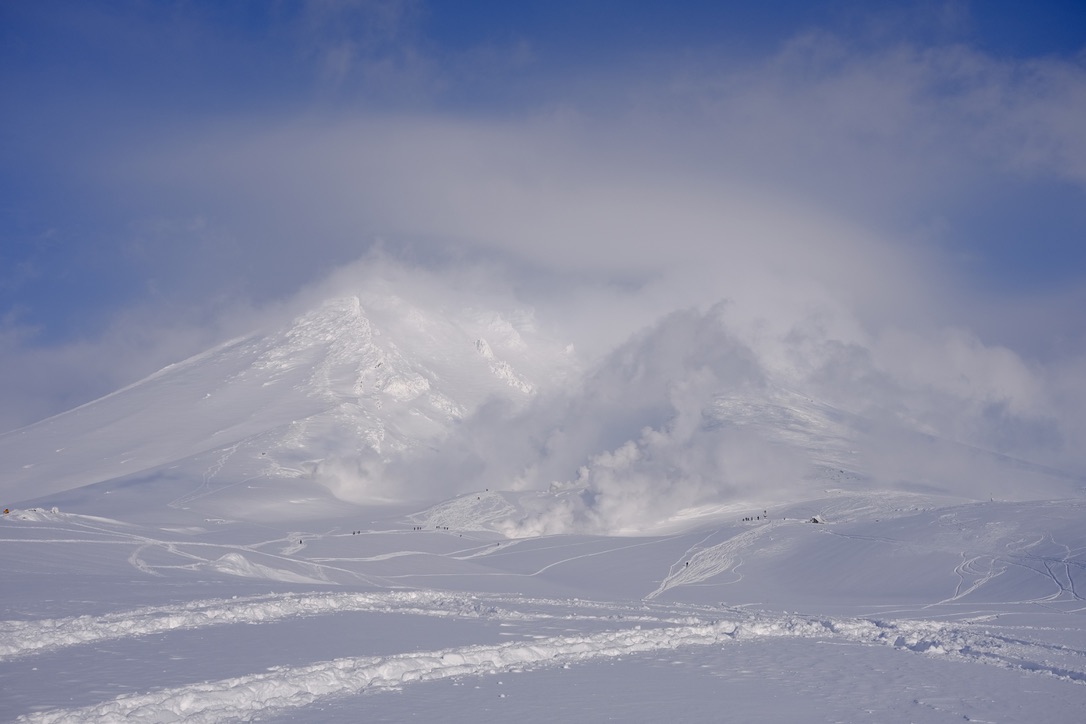
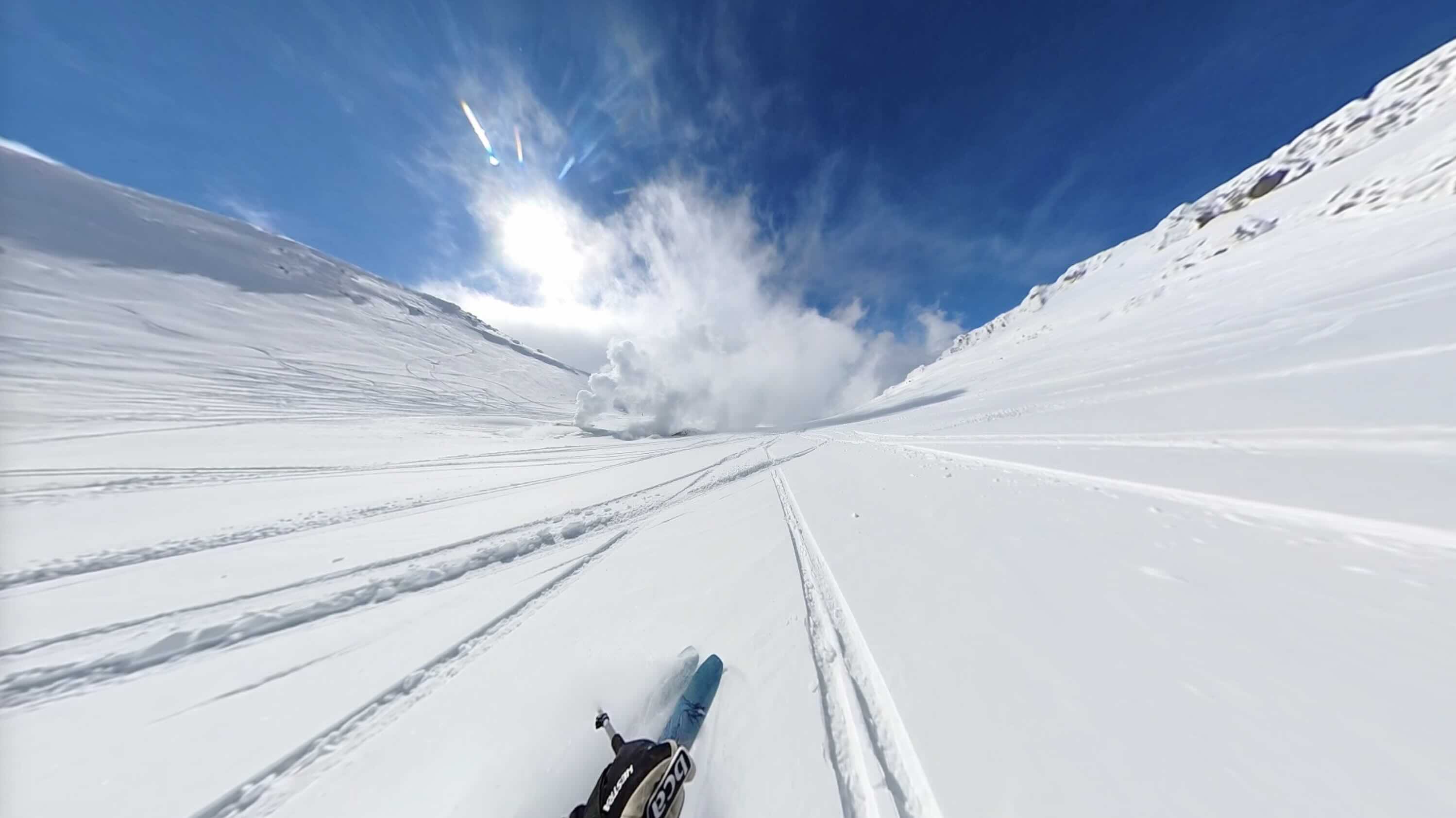
We made two attempts. The first time we headed up in whiteout conditions, betting it would improve. It didn’t. We had to ski back down in 60 mph gusts. Two days later we went again and got a bluebird day with a meter of the lightest powder I’ve ever skied. The snowflakes coming down were at least 3 centimeters in diameter, which made the snow incredibly fluffy. I was on 112mm underfoot skis with rocker spoons, floating above it all.
Touring Performance
Unlike almost everyone else on the mountain, I was able to skin all the way to the top. Most people took off their skis and started to boot. The ATK pins locked me in completely, even on icy slopes near the summit where I was up on my edges. That was my biggest concern going in, and it turned out to be a non-issue. The pins stayed locked and transferred leverage directly into the skis. No pin-shift like I’d experienced on Marker Kingpins or the original Shifts. It was a really reassuring feeling.
On the flats, the negative incline heel position gives you a longer, more natural stride that helps you glide along. You really notice it on long approaches.
Downhill Performance
Coming off the summit in alpine mode, I was totally locked in. My boots sat close to the ski and I could feel and react to everything smoothly. The winds from the days before had left deep powder pockets but also scoured sections of the upper mountain. I could feel the transition between snow conditions immediately and adjust my skiing safely, never feeling wobbly or out of control.
And once we dropped into the powder? I could really let loose. Rocketing down, feeling the skis bounce with me and react immediately. This is the kind of downhill responsiveness I’d been chasing since giving up my Pivots.
On another peak later in the trip, I hit a hidden ice block buried in the powder and double ejected. The release was silky smooth and even though I went flying I was totally safe. After the Shift AFD incident that had me chasing a ski down the mountain, having a clean, predictable release gave me complete confidence in these bindings. DIN certified or not, they do exactly what they’re supposed to do when things go wrong.
The Transition System
This is where the ATK really shines. The system is really simple:
The heel always acts as a normal heel, it just flips up and down. The toe piece rotates 90° around a horizontal axis. When the toe is vertical, you’re in tour mode and a lever at the front separates the pins so you can clip in. To switch to ski mode, lift the lever, pop out your toe, kick the toe piece forward so it goes horizontal, tuck your boot beneath it, and stomp in your heel. Done.
To go back to touring, pop the heel, kick the toe piece back to vertical, press the lever, and pin back in. The heel piece never moves.
That last part is key. One recurring issue I had with the Shifts, and keep seeing others deal with, is the heel piece that has to slide forward and back. It gets icy, hard to move, and fails to lock. With the ATK, you just never have to deal with that.
The only issue I had was snow occasionally getting into the toe piece, making it hard to fully rotate into the tour position. A quick wipe always fixed it.
Once I got used to the system transitions were butter.
The Verdict
I’d call the ATK HY a 70% backcountry, 30% resort binding. The Shift is more like 30% backcountry, 70% resort.
Minor gripes:
- Standard ATK ski leash attachments don’t fit the HY. I had to rig my own attachment point with some paracord.
- Snow in the toe piece occasionally requires a quick wipe before transitioning.
- No DIN certification yet, though when I got them the shop tested the release thresholds with the same equipment they use for DIN-certified bindings and they were right on spec.
- Pricier than the Shift2 at ~$950 vs ~$680.
What I loved:
- Significantly lighter, noticeable over long tours.
- All-metal construction feels bomber even on rugged terrain.
- Transitions are faster and more reliable than the Shift.
- Excellent power transfer and downhill feel for a touring binding.
- Negative heel position in touring mode for natural stride on flats.
Who Should Buy What
Get the ATK HY if you’re someone who wants to charge hard in the backcountry. If you go out for beautiful views but also to ski hard, to get that downhill-style responsiveness and really push your skis, this is your binding. It’s built for people who are committed to the backcountry and want a binding that can keep up.
Get the Shift2 if you’re splitting more time at the resort, or if you’re just getting into backcountry skiing and want one binding that does both well. They’re cheaper, still awesome, and give you the flexibility to build experience whether you’re inbounds or out. The bulkier build actually helps on resort crud and hardpack.
After 2.5 weeks in Japan and some of the best skiing of my life, I’m fully converted. The ATK HY is exactly the binding I’ve been looking for.
Further Reading
- ATK HY Free - Official Product Page — ATK Bindings
- ATK Launches New Hybrid Ski-Touring Binding, the 'Hy' — Blister Review
- Redesigned Shift2 Binding Announced — Blister Review
- ATK Hy Free 13 - Specs & Review — Skimo Co
- Salomon Shift2 MN 13 - Specs & Review — Skimo Co
- Asahidake - Hokkaido's Highest Peak — Wikipedia