Why Downtown Seattle's Empty Offices Won't Lower the Rent
Seattle is one of the emptiest downtowns in the country, mostly because remote work hollowed it out. But years later the space is still empty and still expensive: owners keep their asking rents high even though almost no one will rent at those prices, so the empty space stays expensive far longer than it should. We’ve ended up in an equilibrium where the sellers in a market would rather hold than cut, right up until a loan forces their hand. This is the comp trap.
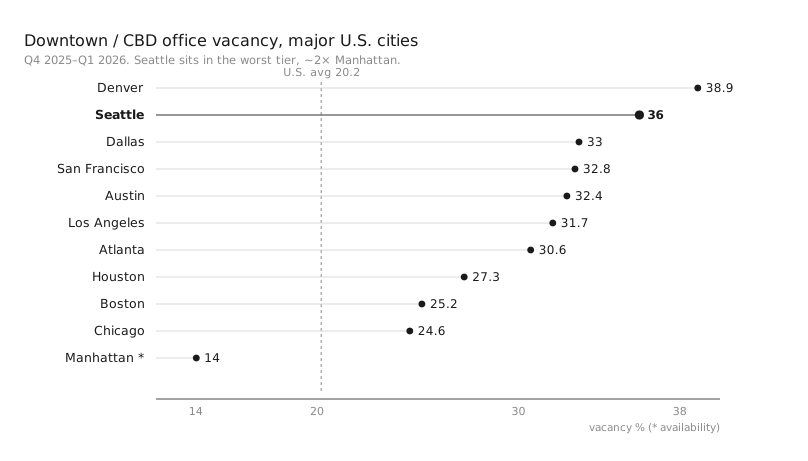
First, how empty it got. Office vacancy downtown went from about 7% before the pandemic to 36.5% now, and unlike the spike after 2008, this one hasn’t come back down.
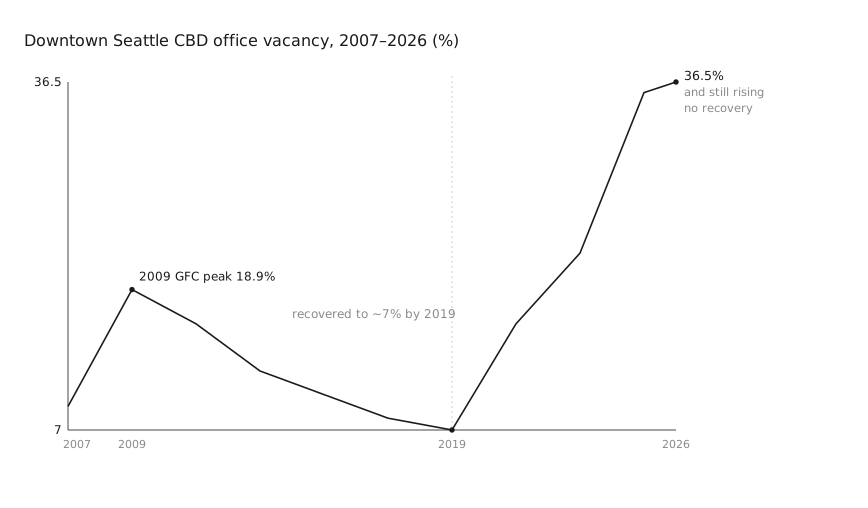
The setup goes back to that 2008 spike. In the cheap-credit years after it, investors bought up office towers with big loans, and those loans came with strings: bank rules about how much the building has to be worth, and how much rent it has to bring in, or the loan goes into default. These strings didn’t matter through a decade of full buildings and rising rents. Then remote work emptied the offices, and those same loan terms became the reason the rent on the empty space won’t come down. To see why, you have to know how an office building is valued.
Calculating the worth of a building
Offices are priced like homes, except instead of looking at similar house values, they look at similar office-space incomes. A building is worth its income: take the yearly rent it brings in, subtract costs, and divide by a rate (the “cap rate”). More rent means more value, so cutting the rent cuts the value.
So how does an appraiser decide what rent a half-empty building “should” earn? They look at recent leases signed nearby. Comparable leases, or comps. Your neighbor signed a floor at $30 a foot last month? That is now evidence for what your floors are worth too.
So your neighbor’s lease sets your value, too.
The comp trap
Now you are a landlord with an empty floor and a loan against the building. You could cut your asking rent and fill it. But the moment you sign that cheap lease, you have created a comp. A fresh, public data point that says this kind of space rents for less now.
That comp marks down your own building first, and hardest, because your own fresh lease is the most direct comp for your own floors. A lower value trips your loan covenant, the bank’s rule that the loan can’t exceed some share of the building’s value, and then the bank can sweep your cash flow, demand you pay down the loan, or call it entirely. It drags down the buildings around you too, since the appraiser will use your lease to value them next. But that spillover isn’t why you hold. You hold because you take the first and biggest hit yourself.
There’s a quieter version of this you can see all over downtown right now. Instead of cutting the posted rent, a landlord keeps the headline number high and gives the tenant the discount in other ways: months of free rent, a fat budget to build out the space, etc. The tenant pays far less, but the only number that lands in the comp database is the high one. Brokers even call this out explicitly: the concessions keep the headline rent up so the comp that lands in the database, the one every other building’s appraiser pulls and the one that hits this building at its next refinance or sale, never marks anyone down. The comp stays high, the covenant stays safe, and the rent actually paid quietly falls.
But that quiet rent cut doesn’t fix the real problem: the asking rent stays high, and a high asking rent is its own barrier. The headline number is a real cost to the tenant, not just a shield for the landlord. A small business signing a lease usually has to personally guarantee it, and the guarantee is sized to the headline number, not the discount. So is the loan its own bank will give it. The concession-loaded deal still clears for a giant tenant who needs no guarantee, and quietly prices out the coffee roaster who would actually move in. Remote work emptied downtown; this is plausibly part of why a sliver of the leftover space stays dark too, a friction at the margin, not the main reason it’s empty.
So nobody wants to sign the cheap lease. The instinct is to cut first: if the markdown is coming anyway once a neighbor caves, you might as well land a tenant. But no voluntary cut is coming. The markdown only exists once someone is forced to print one, and as long as every owner can still hold, no one is. Holding is safe because of timing: the bank only re-checks your value at a refinance, a sale, or when the loan matures, and that value only moves when a fresh comp prints. So the stale high number rides until your own loan comes due, which is exactly when the most-indebted owner gets forced out first. While everyone holds, everyone’s value stays high on paper, and on paper is mostly what the bank looks at. The lender is often aligned, too: some loans, especially ones sliced into bonds, let it block a below-market lease outright, so holding the rent up can be partly the lender’s doing.
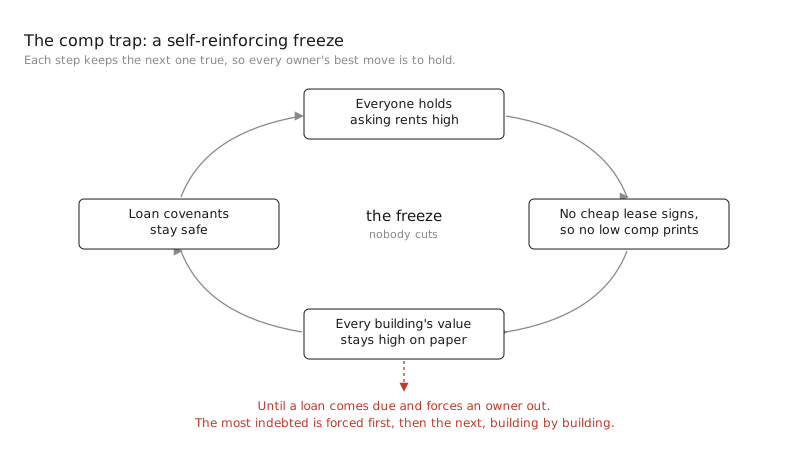
The first owner to cut summons the markdown everyone had been pretending wasn’t there, and eats it first and worst, because their own fresh lease is the most direct comp against their own floors. The neighbors barely feel it: one distressed deal next door only grazes their value, and they’ll lean on their own appraiser to wave it off as a fire sale. So cutting first doesn’t kick off a cascade you ride down with everyone else. It just sinks you, alone, while the rest hold. That’s why holding is the right move for every owner separately.
If that sounds like a cartel, it sort of is, with one big difference. A normal cartel holds the price up to collect more rent. This one holds the asking rent up and collects nothing, because the space sits empty: the number is there to protect the appraised value its loans are written against, not to earn a dollar. And nobody had to agree to anything; the loan terms enforce it on their own.
The freeze holds until the most indebted owner runs out of runway, usually when a loan comes due. We saw it last year with Martin Selig, long the biggest landlord downtown: he hit his loans before anyone else and defaulted on building after building as each one matured, handing the keys to his lenders one tower at a time. Each default printed a cheap comp that marked down paper values across the block, but on its own a comp next door only grazes a neighbor, who waves it off as a fire sale. What forced the next owner out was their own loan maturing, the same wall Selig hit, just later. So the block thawed one building at a time, and a marked-down value still isn’t a filled building.
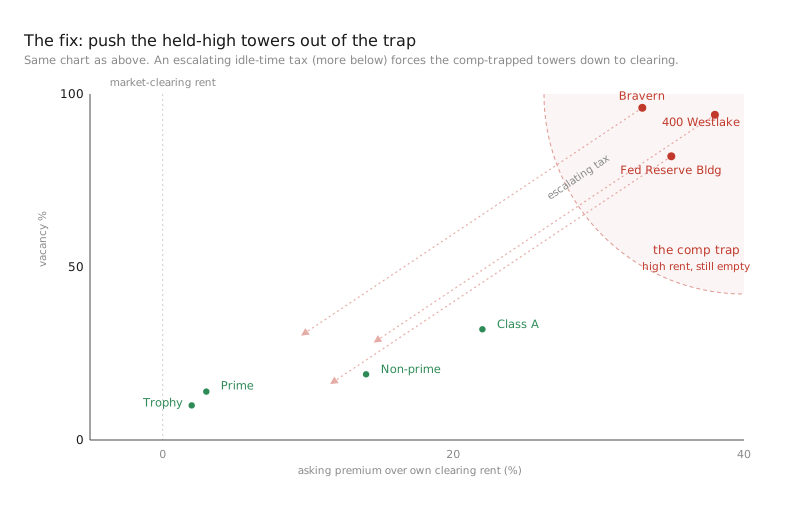
You can see the split in the data. The trophy towers are only about 10% empty; the ones holding well above market are stuck at 30, 80, even 95%. This isn’t just nice-buildings-fill and junky-ones-sit: prime space really does command more, but the split here is each building against its own clearing rent, so a great tower held above its own number sits empty too. The single emptiest, Bellevue’s Bravern, went dark when Microsoft left and still holds its rent. Two more near the top, 400 Westlake (~94%) and the old Federal Reserve Building (~82%), are Selig’s, the ones he defaulted on last year. But they’re still right near the top. The default forced Selig out, but the buildings passed to his lenders, who hold the price exactly as he did. The owner broke; the price freeze on the building didn’t. That’s the gap the tax is built to close, by finally letting the price fall to what the space is worth.
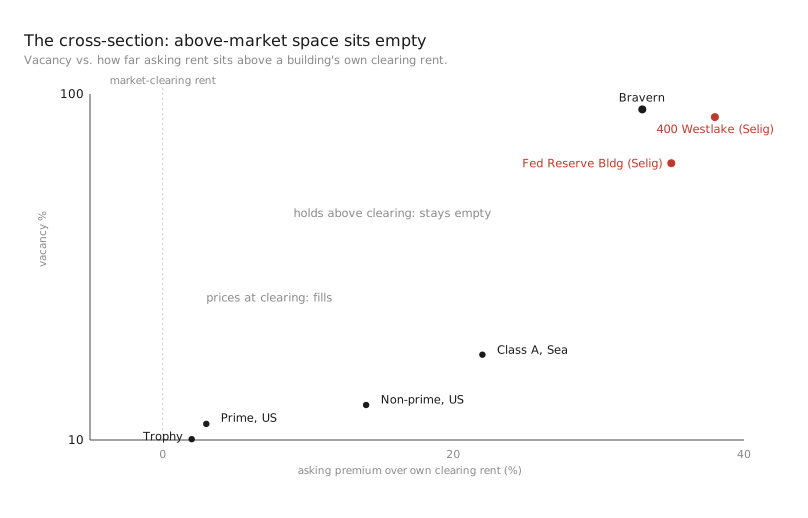
The buildings on the bottom-left are priced at what the market pays, and they fill. The ones on the top-right are priced above it, and they’re empty. That gap, asking rent over what the space would actually clear at, is the wedge the comp trap holds open.
The whole goal of the fix is to force those top-right towers down out of that corner, repriced to what the space actually clears at and on their way back into use, instead of holding the old price frozen for years, whether under their owners or under the lenders who took them.
The damage spreads past the owners. Every floor held dark to protect a comp is a business that never opens, plus the foot traffic it would have brought. The shop with no customers, the lunch spot downstairs that lost its crowd, the block that feels dead at 6pm because nobody works on it anymore: the whole city pays for all of it. The owners at least have a way out, whether they reprice and lease or hand it to the bank. Everyone else just gets the empty street.
What I think Seattle should actually do
Tax empty space, but make the tax escalate the longer a building sits dark, run the clock on each building separately, and pair it with cheaper conversions and help for new tenants moving in. Everything hinges on that escalating part.
A forced default only cures the building when it lands with a clean-basis buyer who reprices it and slowly leases it back up. Handed to the lender instead, the way Selig’s were, it sits frozen exactly as before, which is why his towers are still empty. That’s the difference between a break that cures and one that doesn’t. We do have one real run of the curing kind: San Francisco is about a year and a half ahead of us. A trophy tower there sold for about 70% off back in 2023, and that first clean comp let buyers underwrite again; by early 2025 leasing had climbed back to its best since 2019, even with the city still a third empty. The longer everyone protects the old price, the longer that takes. The tax forces the repricing, building by building, and sooner than the freeze would allow. I’m not rooting for anyone to lose money, and I’m not trying to rescue them either, I just want the space back in use. Here’s the carrot and the stick.
The stick: a tax that escalates the longer a building sits empty. Not a flat fee, which (see my note) the owners deepest in debt can just outwait. Make it ramp: nothing the first year, then climbing each year on a schedule everyone can see coming, roughly $5, then $11, then $18, then $26 a square foot. Now waiting has a deadline. At some point the tax gets bad enough that waiting ends: the owners with a little room reprice and start leasing the space back up, and the ones too deep in debt to lease hand it to the bank. Both are fine, and here’s why handing it over still counts: the tax keeps running against the building until someone fills it, so a lender can’t just sit on it the way Selig’s are. A sale doesn’t reset it either: the tax follows the building and only stops when the space is filled, so flipping it to a friend buys nothing, and a real buyer has to price the running tax in and lease the place up to switch it off. The important detail is to run the clock on each building’s own vacancy date, so they don’t all hit the wall the same week, and to charge it on the empty space until it’s actually back in use. Not posted, not offered, actually full, with real occupants, a real lease or real residents, not a pop-up that clears out in a few months. (DC just passed an escalating version of this, though its ramp doesn’t start until 2027, so there’s nothing to grade yet; San Francisco’s storefront version steps up by year too, $250 to $500 to $1,000 per foot of frontage.)
The carrot: make the exit cheap. If you want owners to convert a dead office to housing or something else useful, stop making conversions a permitting nightmare. Seattle already started, deferring conversion taxes and waiving some reviews last year. Pair it with help for new tenants moving into cleared or converted space. Seattle already runs a good version of this, Seattle Restored, which puts mostly women- and BIPOC-owned businesses into empty storefronts, and it deserves a lot more funding.
A quieter complement, so the bill doesn’t shift to homeowners. There’s a wrinkle specific to Washington: our property tax is budget-based, so a district picks how much to collect and splits the bill by assessed value. Two different values matter here: what a building would sell for, which we want to fall (that’s the repricing), and what the county assesses it at for the tax split. If the assessed value craters too, the same bill just shifts onto homeowners. (The recent King County shift is mostly home appreciation, not the office collapse, but the direction is real.) So let the sale price reprice, but keep assessing idle buildings at what they’d be worth in use while this shakes out, so the commercial base on the tax rolls doesn’t collapse. That way we don’t impact what homeowners pay.
The problem and the fix
Downtown is empty mostly because of remote work. The comp trap is why the empty space stays expensive and slow to clear, and at the margin keeps some of it dark: the first owner to cut rent prints a comp that marks down their own building and trips their loan, so everyone holds instead. The fix is a vacancy tax that escalates on each building’s own clock, so the repricing happens one building at a time instead of staying frozen.
The full model, the Seattle numbers, and the formal test are all in Frozen Frontage: The Comp Trap.