Gear Review: Salomon S/LAB Shift Binding
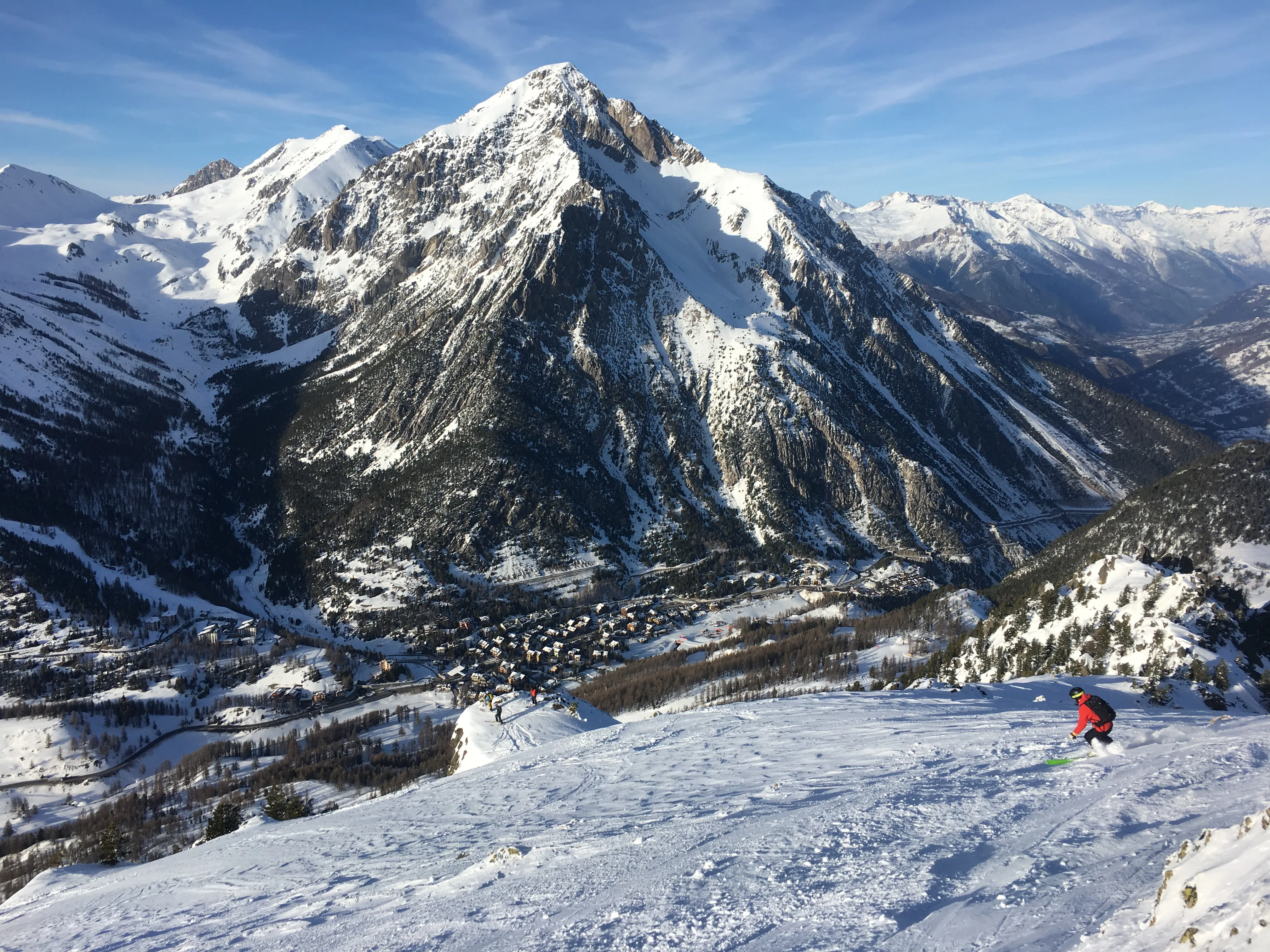
The last run of my first trip to Japan, on the final day of 14 straight days of powder, I dropped a 15-foot cliff and watched one of my skis leave without me. The binding let go in the air. My DPS bounced once and then it was gone, sliding down the mountain while I rode out the rest of the run on a single ski.
Turns out the Shift has a known problem with its AFD, and it had given me a warning the day before that I shrugged off.
I skied the Salomon Shift for seven years and loved almost all of it. It was the first binding that let me tour without giving up the downhill, and for most of a decade it was exactly what I wanted underfoot. Here’s what made it so good, the flaw that ended it for me, and whether you should still buy one.
Why the Shift
I came to the Shift from Look Pivots. The Pivots are still one of the best alpine bindings ever made, but they don’t tour, and I was itching to start earning turns. On my first trip to La Grave I tried a pair of full-pin Dynafits on the side, still skiing my Pivots the rest of the time. That was all it took. The climb was easy, but the downhill made it extremely clear I never wanted full pin bindings: all that pin elasticity and soft power transfer, none of the locked-in feel of the Pivots. Pins gave up too much of what makes skiing deep snow fun.
The Shift fixed that. It was the first binding with a real alpine toe that steps in and locks like a resort binding, so on the way down it skis like one. Your boot sits low and close to the ski, you’re clamped in, and the power goes straight from your foot to the edge. Then you flip it into tour mode and walk uphill on pins like any other touring setup. The first true hybrid that didn’t make me choose. I got a pair the first year they came out, pulled my Pivots off that afternoon, and didn’t look back for seven years.
I skied them hard and just about everywhere: La Grave, Hokkaido and Hakuba, Colorado, BC, and all over the PNW. Big alpine faces, tight trees, long approaches, icy couloirs near the summit. They went bomber the whole time.

The Downhill
Going down is the whole reason the Shift exists, and it delivers. With a true alpine toe and your boot seated right down on the ski, you get the feel and the power transfer of a resort binding, not a touring one. I could charge as hard as I wanted, hold an edge on boilerplate, and trust it through fast, variable snow. It skied like my Pivots, which is the highest compliment I can give a binding that also climbs. For seven years it was the most confident I’d felt on anything that could earn its turns.
The Up, and the Transition
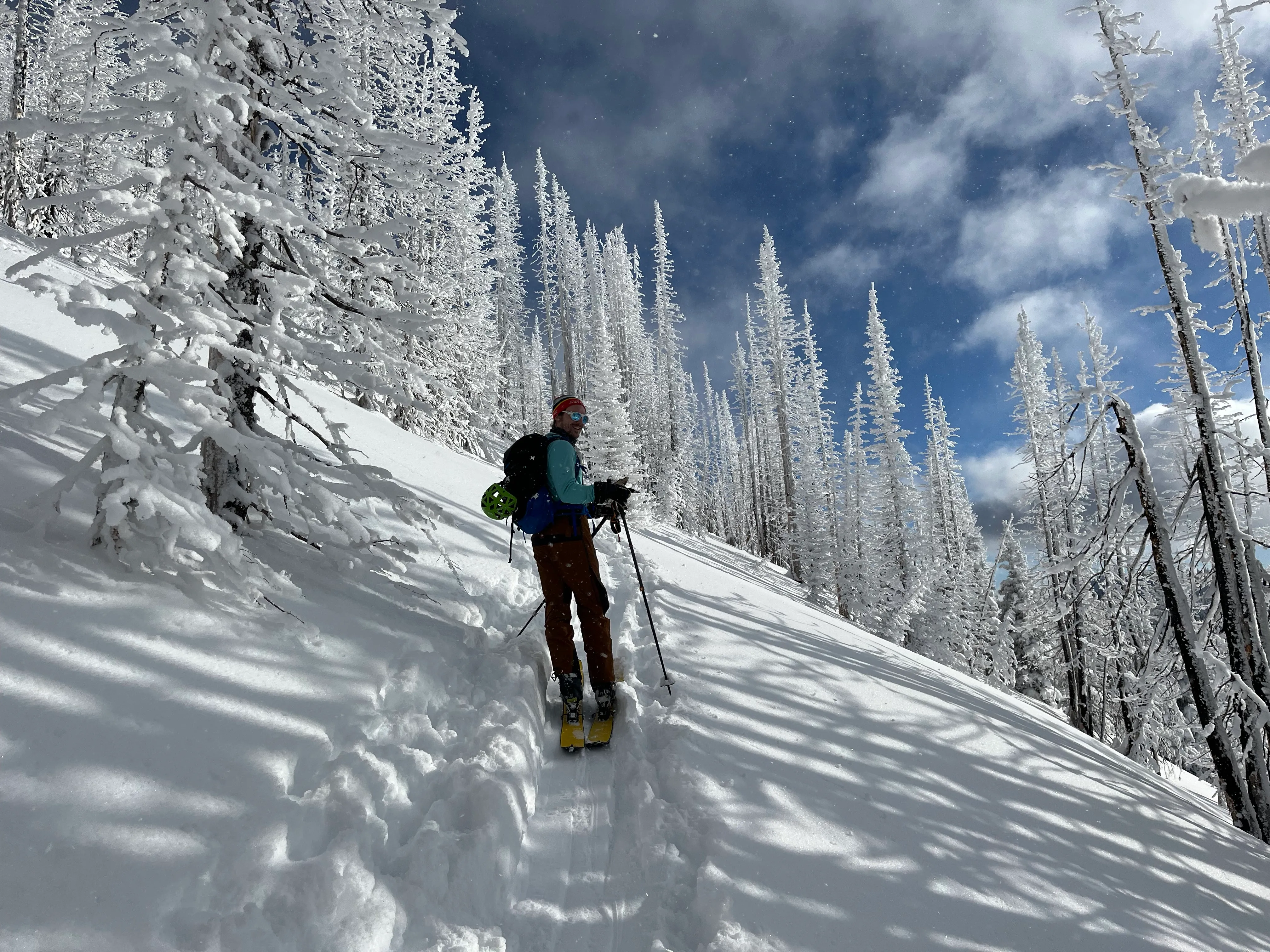
The price of all that downhill performance is weight. The Shift is heavy, around 885 grams a binding, and you feel every gram on a long skin track. On a big day with a few thousand feet of climbing, it shows up in your legs.
The transition is the other tax. You slide the heel forward and flip the toe to switch modes, and it’s fussy. It collects ice, packs with snow, and on cold mornings it fights you when you try to lock back in. I lost more than a few minutes at the top of a climb wrestling a frozen heel piece while my partners stood around waiting.
In fairness, almost every touring binding has a finicky transition, so the Shift isn’t unusual there. What makes it stand out in hindsight is the ATK HY I switched to: rotate the toe 90 degrees, stomp into the heel, done. It’s so much simpler that it’s a little surprising no one built it that way sooner. (One more Shift quirk: the spring-loaded brake lock snaps shut hard enough to sting your hand if you’re not using a pole tip to set it.)
The AFD Problem
The AFD is what ended it for me. The Shift has a documented problem with its anti-friction device, and it’s the reason my ski ran away in Japan.
The AFD is a small plate under the toe of the binding. Its job is to let your boot slide out cleanly, and at the right force, when you need to release. On the original Shift, that plate sits on a set of stepped wedges, and the screw that sets its height can slowly back itself out over a day of skiing. As it drops, a gap opens between your boot and the binding, the toe stops holding you the way it should, and your real release value quietly falls. You can set it perfectly in the parking lot and be skiing a binding that pre-releases two hours later.
That’s what happened to me, twice, in two days. The day before the cliff, I stopped in the trees, went to skate forward, and stepped straight out of a ski that was still locked in. I figured I’d clicked in wrong, stepped back in, and forgot about it. The next day I dropped that 15-footer, the toe let go in the air, and the ski was gone. Same failure both times: the AFD had walked down out of position, and there wasn’t enough binding left holding my boot. The step-out is the tell. No fall, no twisting force, my boot just strolled out of a toe that had stopped doing its job.
Not every Shift does this, and some of the reports trace back to shops setting the AFD up wrong (you have to lift the boot before you turn the screw, and plenty of people missed that). But it’s widely reported, by serious reviewers and a very large number of users, and Salomon never recalled it. The 2023 recall covered the MTN, Backland, and Tracer, not the Shift. The clearest admission is the redesign itself.
Shift vs. Shift2 vs. ATK HY
If you’re shopping now, the original Shift is mostly off the shelves, and you’ve got two real options: the Shift2, which fixed the AFD, or a lighter pin-based hybrid like the ATK HY Free 13 I switched to.
| Spec | Shift MNC 13 | Shift2 13 | ATK HY Free 13 |
|---|---|---|---|
| Weight (per binding) | ~885g | ~900g | 675g |
| Weight (pair) | ~1,770g | ~1,800g | 1,350g |
| Release range | 6-13 (DIN) | 6-13 (DIN) | 6-13 |
| Toe | Full alpine step-in | Full alpine step-in | Rotating tech pins |
| AFD | Wedge-based, can drop in use | Reinforced, fixed | n/a (pin toe) |
| Brake widths | 90, 100, 110, 120mm | 90, 100, 110, 120mm | 97, 108, 120mm |
| Boot compatibility | Multi-norm (alpine + touring + GripWalk) | Multi-norm | ISO 9523 / GripWalk (tech inserts) |
| TÜV/DIN certified | Yes | Yes | No (designed to pass) |
| Price | ~$600 (now clearance) | ~$650-680 | ~$950 |
The Shift2 is the one to buy if you want what the Shift does. Salomon scrapped the wedge AFD for a reinforced block that doesn’t back itself out, beefed up the toe wings, and fixed the brake lock. Early reviews say the release finally stays put all day, though it’s new enough that the long-term durability isn’t proven yet. It’s about 15 grams heavier per binding, which nobody will ever feel.
If you tour more than you ride lifts, look at the ATK HY instead. It’s 450 grams lighter per pair, all metal, and its rotating toe skis with the same locked-in feel I loved on the Shift, without the alpine-toe bulk. I broke that decision down in my ATK HY vs Shift2 comparison, and the full ATK HY review covers how it held up over 2.5 weeks in Hokkaido. The short version: the Shift is a resort binding that can tour, and the ATK is a touring binding that can charge.
The Verdict
Rating: 4/5. For seven years the Shift was the best binding I’d owned, and judged purely on how it skis, it still is for the resort-first crowd. It’s bomber, the downhill is genuinely excellent, and you can find the original on clearance for cheap right now. The AFD issue is the one thing keeping it off a 5, and it’s a real one: it cost me a ski off a cliff in Japan. The Shift2 reportedly puts that to bed, which is why I’d point anyone toward the new one over a closeout original.
What I loved:
- True alpine downhill feel. Boot sits low, locked in, full power to the edge.
- Bomber for seven years across La Grave, Japan, Colorado, BC, and the PNW.
- One binding for both alpine and touring boots (multi-norm).
- Easy to find cheap now that the Shift2 is out.
The gripes:
- The AFD can drop during the day and cause a pre-release. This is the big one, and it’s a safety issue, not a nuisance.
- Heavy. You feel it on every long climb.
- The transition collects ice and can be a fight to lock in the cold.
- The brake lock lever snaps hard enough to sting your hand.
Who Should Buy What
Get the Shift2 if you spend most of your time at the resort and want the option to tour. It steps in like an alpine binding, works with both alpine and touring boots, is DIN certified, and the redesign fixes the flaw that sank the original. For one quiver-of-one binding that leans resort, it’s a great pick.
Get the original Shift on clearance only if you understand exactly what you’re buying. The price is tempting now, but it’s the version with the AFD problem. If you go this route, set the AFD correctly, check it before every day out, and run leashes so a pre-release doesn’t cost you a ski. For most people, the few hundred dollars saved isn’t worth babysitting your release values.
Get the ATK HY Free 13 if you tour more than you ride lifts and want to charge on the way down. It’s lighter, simpler to transition, and skis with the same locked-in feel, which is exactly why it replaced my Shifts. (Full writeup here.)
FAQ
Is the Salomon Shift a good binding?
Yes, especially for resort-first skiers who tour occasionally. The downhill feel is genuinely excellent because it has a real alpine toe. The catch is that the original Shift has a documented AFD issue that can cause pre-release. If you want what the Shift does, buy the redesigned Shift2, which fixed it.
What is the Salomon Shift AFD issue?
The AFD (anti-friction device) is a plate under the toe that lets your boot release cleanly at the set force. On the original Shift it sits on stepped wedges, and its height-adjustment screw can back itself out over a day of skiing. As the plate drops, play opens up between your boot and the binding, the effective release value falls, and the binding can pre-release even though you set it correctly that morning. The Shift2 replaced the wedge AFD with a reinforced design to stop this.
Does the Salomon Shift pre-release?
The original Shift can, because of the AFD dropping out of position during use. It's widely reported by serious reviewers and a large number of users. It's not universal, and some cases trace back to incorrect AFD setup, but it's real enough that it cost me a ski off a cliff in Japan. Run leashes, check the AFD before every day out, or buy the Shift2.
Was there a Salomon Shift recall?
No. The 2023 Salomon, Atomic, and Armada recall covered the MTN, Backland, and Tracer bindings for a broken spring issue, not the Shift. The AFD problem on the Shift was never the subject of an official recall. The clearest acknowledgment came through the Shift2 redesign.
How much does the Salomon Shift weigh?
About 885 grams per binding for the Shift MNC 13 with a 90mm brake, roughly 1,770 grams per pair. That's heavy for a touring binding, and you feel it on a long skin track. The ATK HY Free 13 I switched to is about 450 grams lighter per pair.
Salomon Shift vs Shift2: what's the difference?
The Shift2 replaced the original's wedge-based AFD with a reinforced block that doesn't back itself out, enlarged the toe wings, and fixed the brake lock. It's about 15 grams heavier per binding, which you won't notice. If you're choosing between them, buy the Shift2. It does what the original did without the flaw that defined it.
Salomon Shift vs ATK HY Free 13: which should I buy?
Get the Shift (or Shift2) if you're resort-first and want one binding that works with alpine and touring boots. Get the ATK HY Free 13 if you tour more than you ride lifts: it's 450 grams lighter per pair, transitions faster, and skis with the same locked-in feel. I switched from the Shift to the ATK HY and broke the comparison down in a separate post.
What boots work with the Salomon Shift?
The Shift is multi-norm (MNC), so it accepts alpine (ISO 5355), touring (ISO 9523), GripWalk, and WTR boot soles without an adapter. To tour, your boot also needs tech inserts in the toe, since the Shift walks on pins. Hybrid boots with both tech inserts and a GripWalk sole are the sweet spot.
What is the DIN range on the Salomon Shift?
The Shift MNC 13 has a release range of 6 to 13. The Shift MNC 10 covers 4 to 10 for lighter skiers. I run my release value at 10, so I went with the 13: you want to sit near the middle of a binding's range rather than maxed out at the top of it, which is exactly where DIN 10 would land you on the MNC 10. Both are TÜV/DIN certified.