Self-Guided Backcountry Skiing in Hokkaido
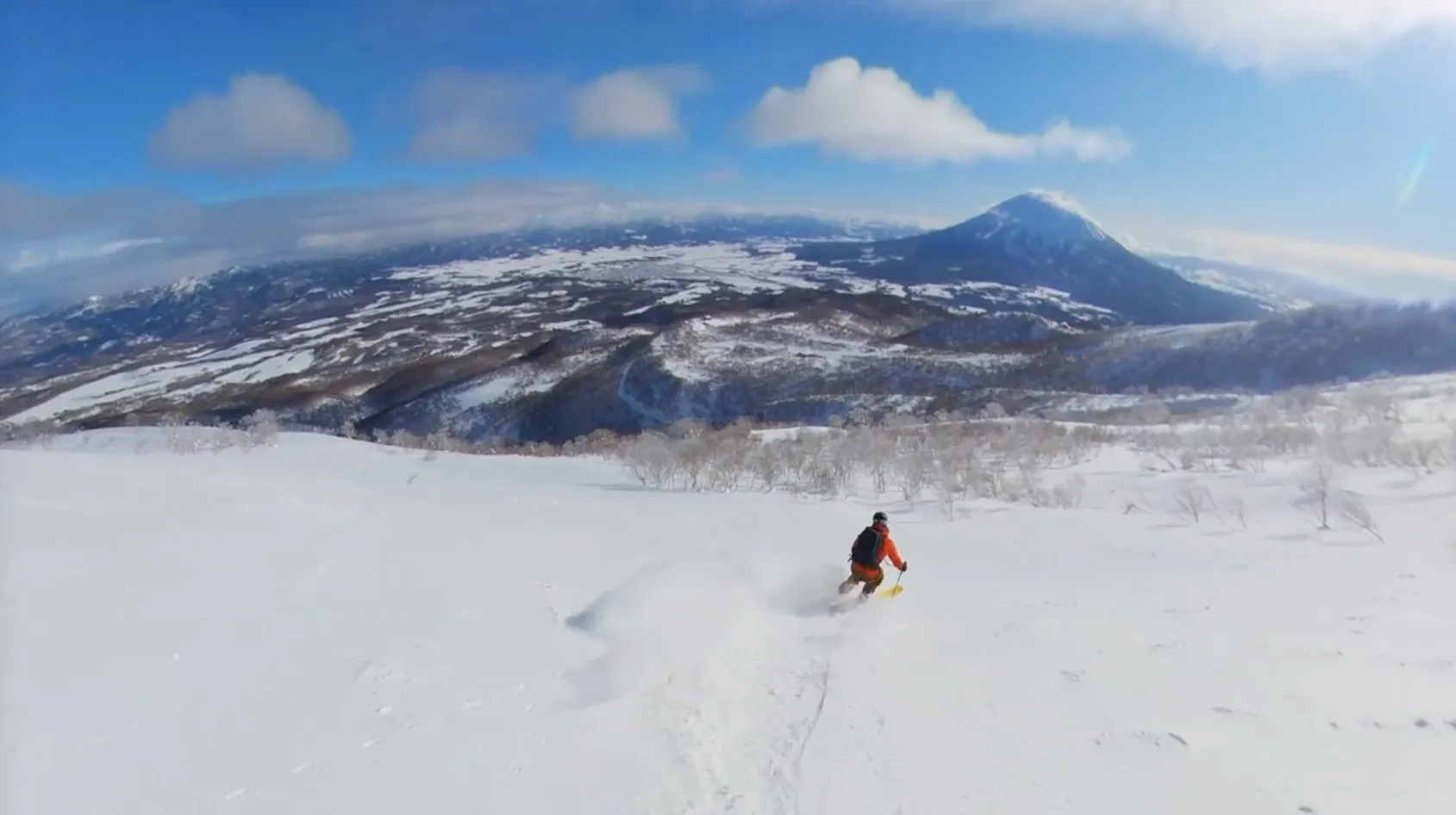
Hokkaido skiing is unparalleled. Massive amounts of powder, perfect temperatures, good friends, and some of the tastiest food make it world-class. I started skiing there yearly with friends, mostly backcountry, and this last time it was just us, maps we found from blogs online, weather windows, last-minute Airbnbs, and a rental van stuffed with skis.
Most people talking about skiing in Japan stick to the resorts (which are beautiful!), and they tend to stick to just two of them: Niseko and Rusutsu. They’re stunning, and they’re on American passes like Epic and Ikon, but that also means they get absolutely smashed by foreigners crowding the mountain and driving up prices. Leave those two behind (or at least duck into the sidecountry) and you can have a whole mountain to yourself with all the powder you can handle. Go even further north and you’re rewarded with snow that’s colder, lighter, and somehow even deeper.
These are my favorite places from the past two years, all self-guided, the four areas I’d point you to, along with safety tips, food tips, and a bit on good tourist etiquette in Japan.
Heading North
I genuinely can’t describe how incredible the powder is in Hokkaido. It’s like the light continental snow you’d get in Utah or Colorado, except it shows up consistently waist-deep.
Part of the reason is the same phenomenon that makes lake-effect snow off the Great Lakes, except here it’s the ocean. Bitterly cold air sweeps in off Siberia, crosses the relatively warm Sea of Japan and soaks up moisture, and then dumps all of it onto Hokkaido. When that flow organizes into a band called the JPCZ, the Japan Sea Polar Air Mass Convergence Zone, you get huge amounts of snow. Sapporo, one of the largest cities on Hokkaido and almost at sea level, averages close to six meters a year.
Up north it’s even colder, which makes the snow even lighter. I saw some of the biggest flakes of my life there, literally half the size of your finger, falling into waist-deep powder. Every single turn is throwing faceshots, and you have to change how you ski just to keep your visibility. I was constantly looking for steeper lines to hold more speed, diving in and out of the trees, enjoying every second of it.
There are also just fewer people up there. Most foreigners stay down in Niseko or Rusutsu, so the moment you leave those behind you get the whole place to yourself. Just you, your friends, and endless powder is a pretty great reason to head north.
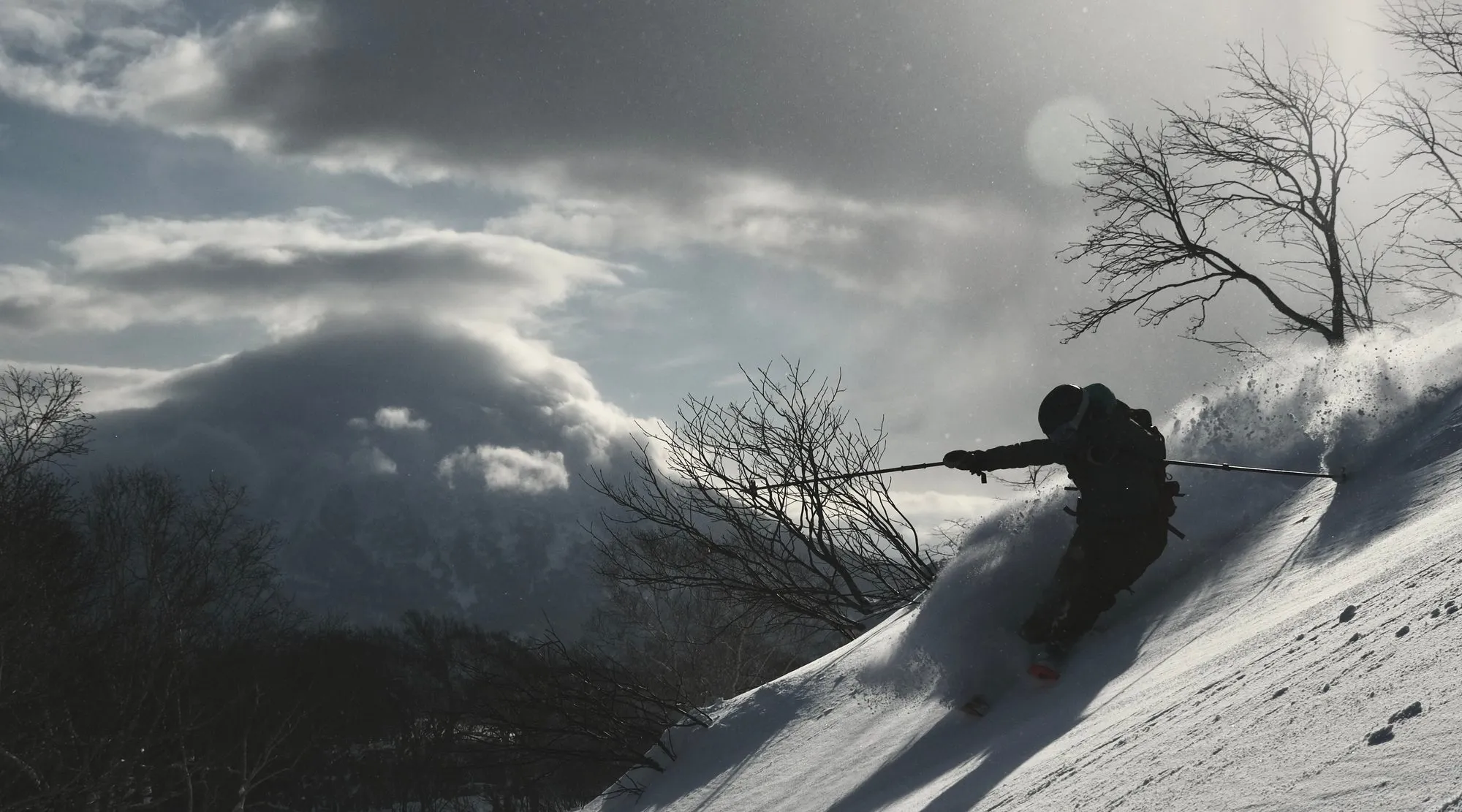
Asahidake
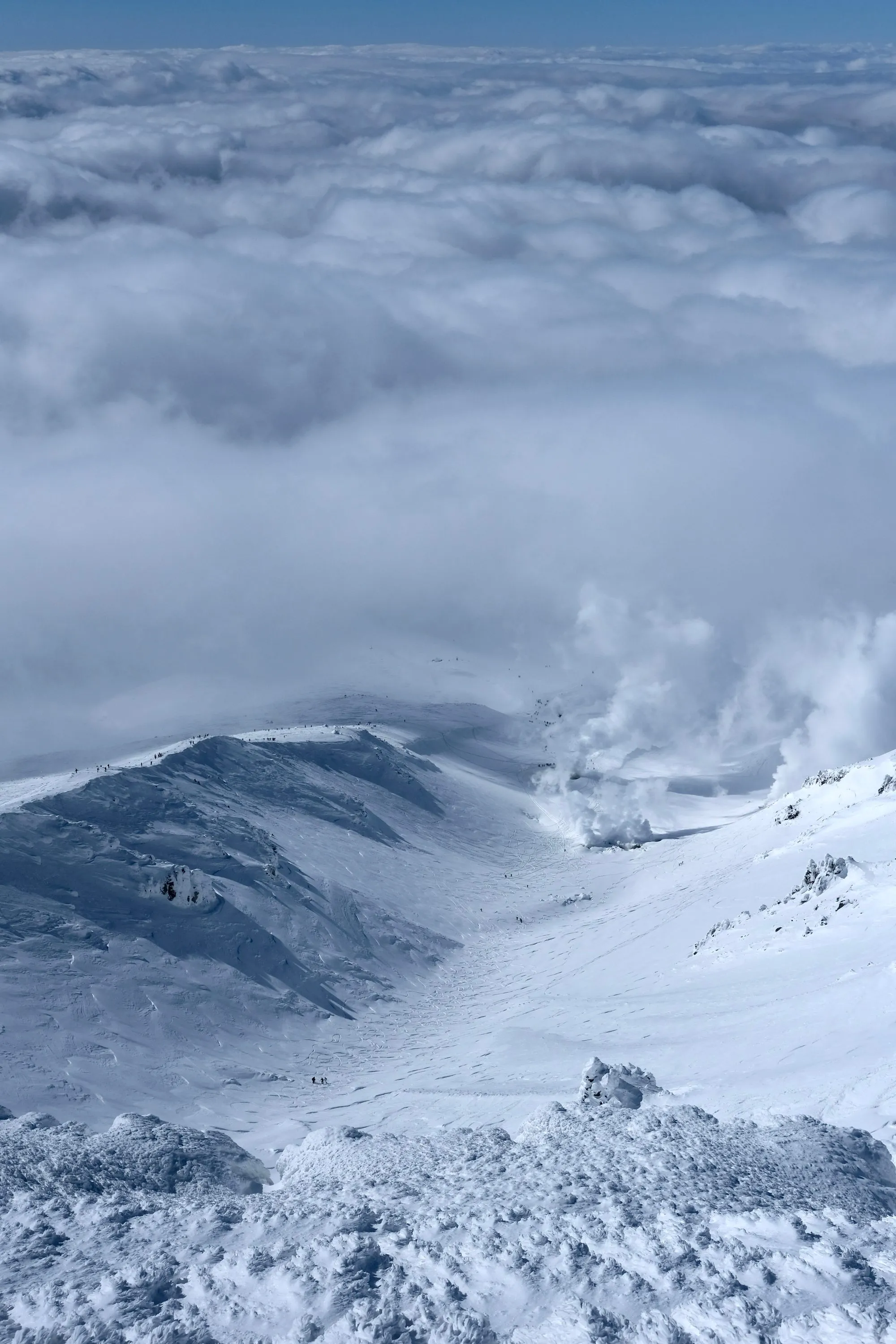
Asahidake is the highest peak in Hokkaido at 2,291 meters, and it’s still an active volcano, sitting almost dead center on the island. This past year it was the main objective of our trip. It has these stunning fumaroles, massive steam vents shooting sulfurous clouds straight out of the snow. The sulfur is a little sketchy to breathe, but skiing right past the vents, or even straight through the billowing clouds, is next level. The whole thing is a national park with completely open access for you to enjoy.
I’d recommend basing yourself in Asahikawa, the largest city nearby. It’s an easy hour’s drive to the Asahidake ropeway parking lot, where you take the tram up. You’ll share it with other skiers, people heading out to snowshoe, and folks sticking to the one or two packed-down trails to reach the closest fumaroles. There’s a ton of terrain and it’s slowly getting more popular, so on a good day the line can stretch to thirty minutes or an hour to get back to the top. But when a single run is taking you an hour, that’s an easy trade.
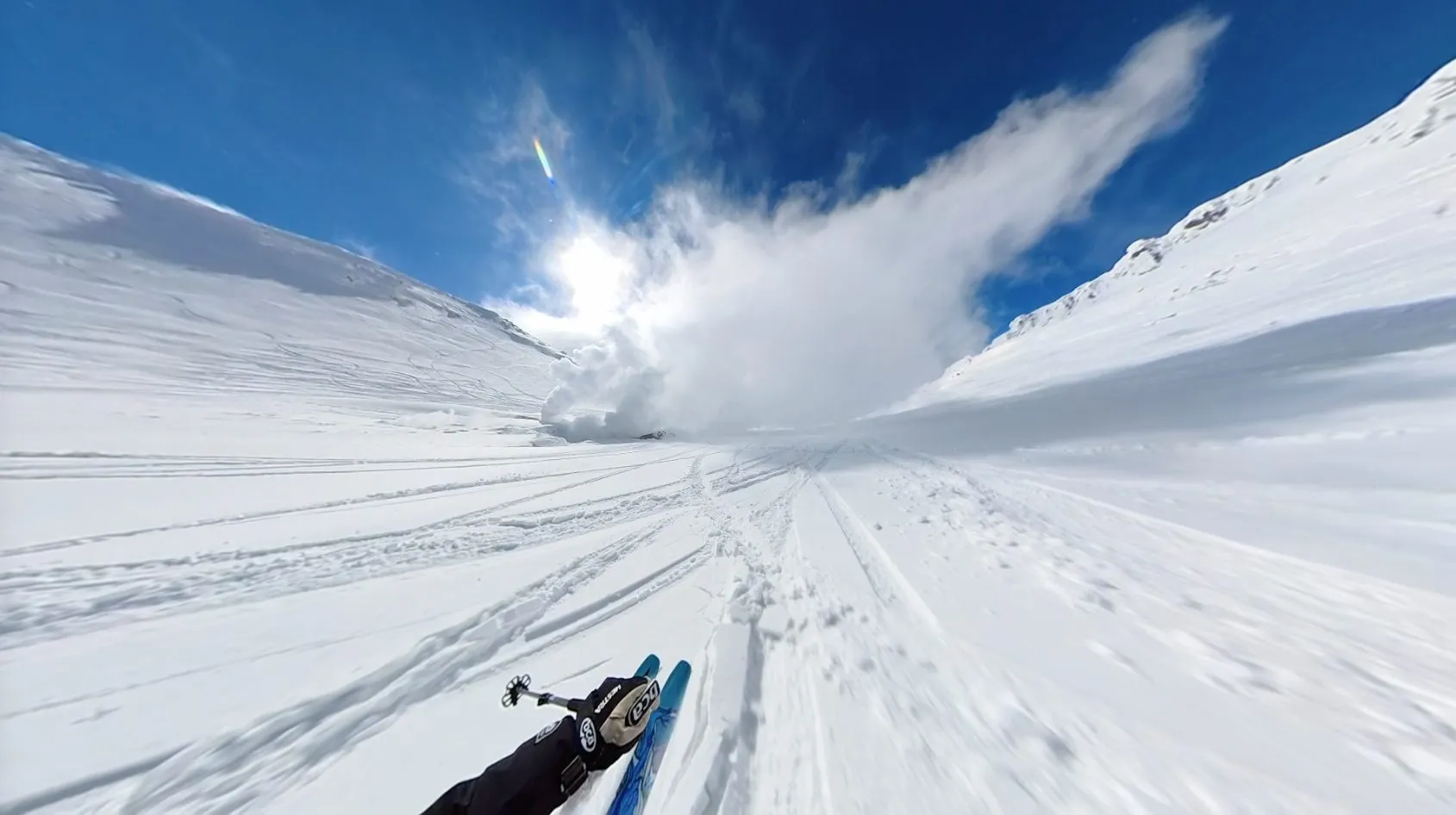
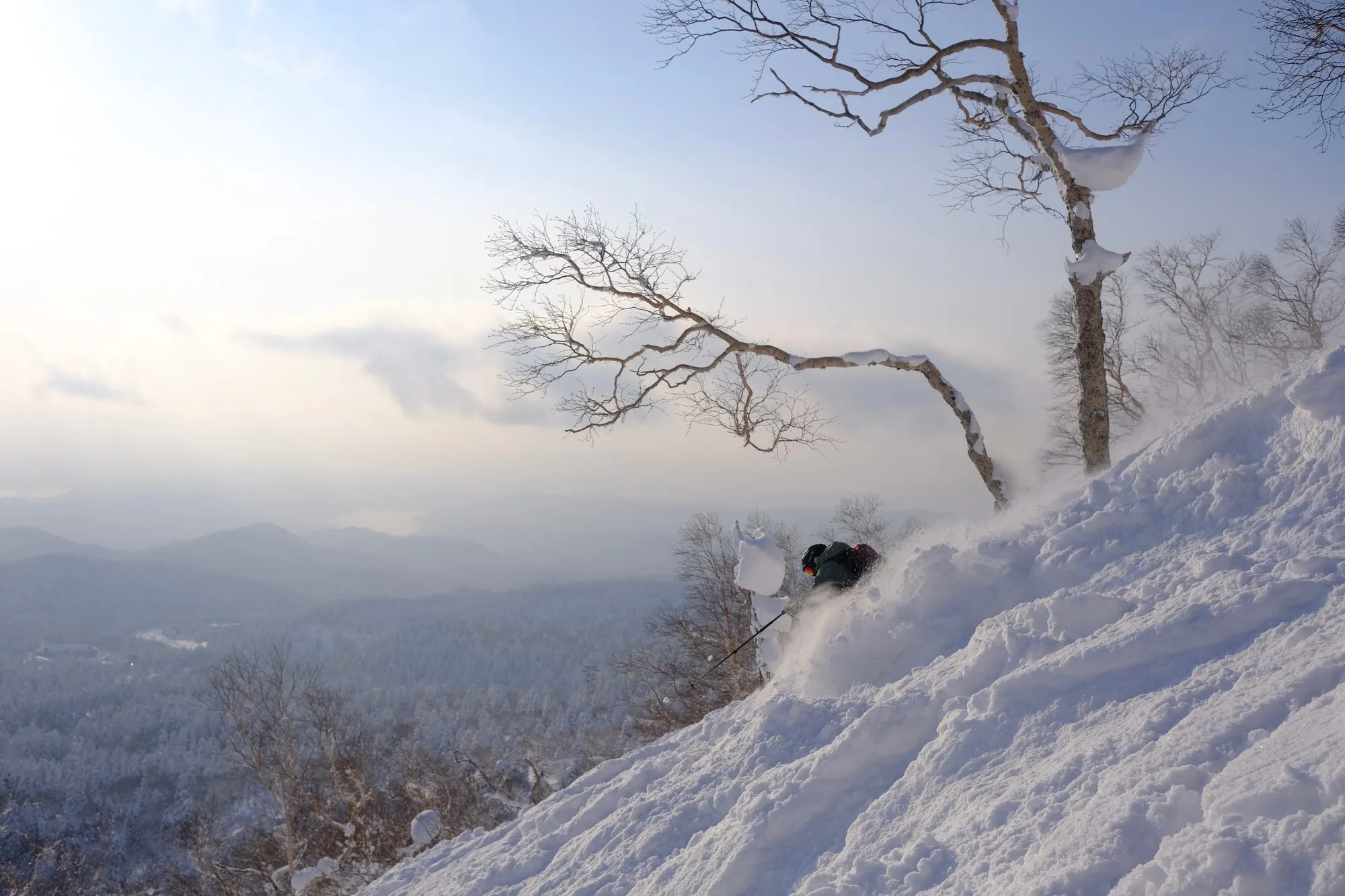
The tricky part up here is the weather. You’re on the tallest mountain on the island, so it brews up its own wind and clouds. Our first attempt, we gambled on an afternoon visibility window and it slammed shut on the way up. We pushed on and reached the summit anyway, into a whiteout with 60 mph winds, but we couldn’t see enough to ski anything worthwhile. So we came back down with some wind scarring on our faces and a touch of frostnip (it drops way below freezing up there, so be careful). Luckily, down at the top of the tram and below the clouds it was clear, and we still got to enjoy the terrain.
The storm settled in for two days, which we spent at some of the other mountains and hills I get into below. But we stuck around for Asahidake, because there was a perfect bluebird day waiting on the other side of the dump. Two days later it was dead clear, no clouds, no wind, and still freezing at the top. We got to the lot forty minutes before the tram opened and made the third car up. As we toured toward the summit, clouds started rolling into the base of the mountain and gave me my favorite thing, an inversion layer. Then we crested the rim and dropped into that perfect, massive bowl with the fumaroles steaming below us, for one of the most chill and beautiful runs of my life. The grade is goldilocks perfect, not too steep and not too shallow, just bouncing through turn after turn of bottomless powder.
Furano: The Tokachidake Area
While the storm was parked over Asahidake, we pointed the van south for some steeper skiing. Looking around online we found the Tokachidake area, which has some of the steepest terrain in Hokkaido. We found ourselves at a little touring entrance right next to the Ryounkaku inn. Ryounkaku sits at about 1,280 meters, the highest onsen in the prefecture, and has some incredible post-tour baths. The water is a gorgeous murky iron-red, inviting you to sink into it while looking out at the snowy peaks.
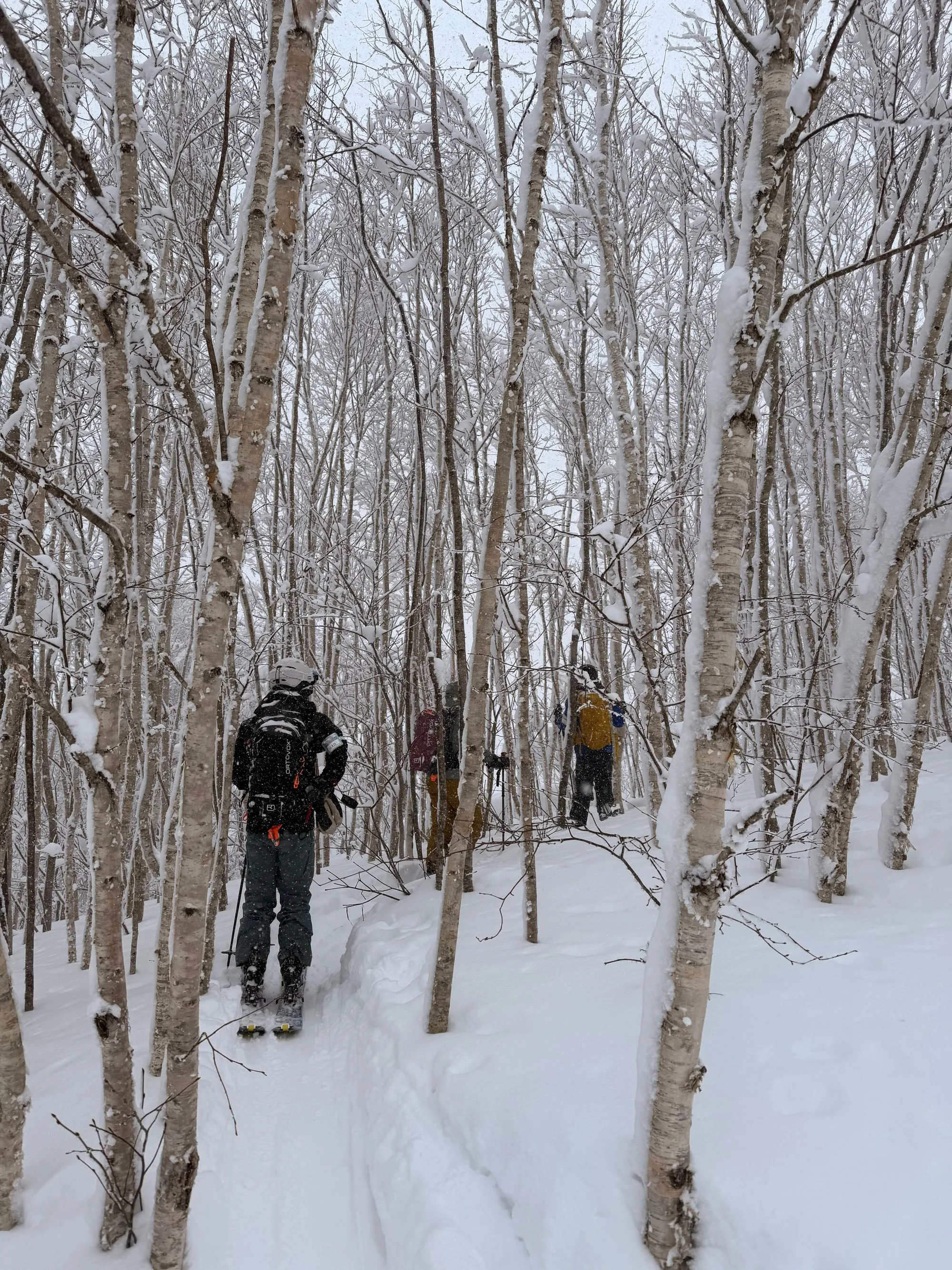
The skiing in Tokachidake is steeper than Asahidake, which combined with that light powder is amazing. We were constantly managing our sluff, tossing tons of powder below us, but it was so light and steep that we didn’t have to worry about the slope slipping. There were more trees there, but we were able to find some clean open faces that we could lap over and over. And while it doesn’t have the sheer scale of Asahidake, it’s gorgeous, there are even fewer people, and the snow is just as good. We happened to run into a few other people from our previous Asahidake day who had made the same choice!
Those steep slopes also give some nice protection from the elements. The edge of the storm over Asahidake was here as well, but we were able to tuck into the trees and stay under the ridgeline to avoid the worst of the winds. Some runs here were wide open and topped with cornices where we could grab some air dropping onto the face below.
Pippu
Pippu is a tiny community hill north of Asahikawa. The local farmers run it in the winter while their farms are buried under the snow. Schoolkids were out there bombing runs, racers practicing on a small, nicely groomed run, some military crews in for fitness training, families eating together in the lodge. The whole community was out there, which is something I’ve felt a lot of American resorts have started to lose. And because it’s family-run, it had some of the best home cooking coming straight out of the kitchen.
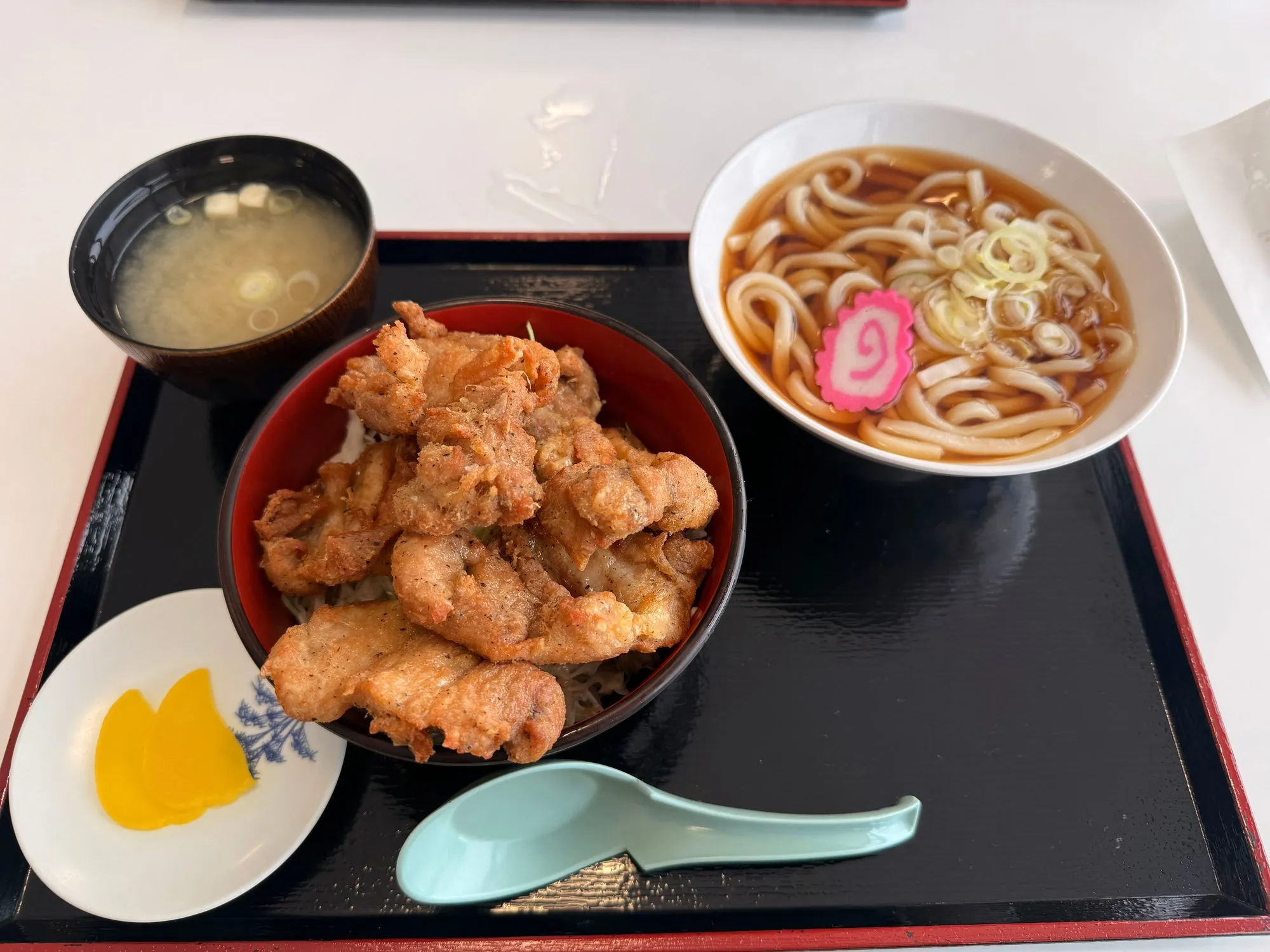
Lift tickets were about $20 USD, and we opted for the slightly more expensive version which included the onsen just down the road. The hill itself is on the smaller side, but we toured up a bit more to the peak and then dropped off the back into some powder-filled glades. These all funnel you back to a cat track that guides you straight back to the resort, so you get some awesome lift-assisted tree-bouncing time.
Skiing the Yotei Crater
Mt. Yotei is the big symmetrical cone that towers over Niseko, 1,898 meters, so perfectly shaped that everyone calls it Ezo-Fuji. It’s a stratovolcano, and the prize is dropping into its summit crater, the Chichigama, a 700-meter-wide bowl right at the top. We summited and skied it, and it’s one of the best days I’ve ever had on skis.
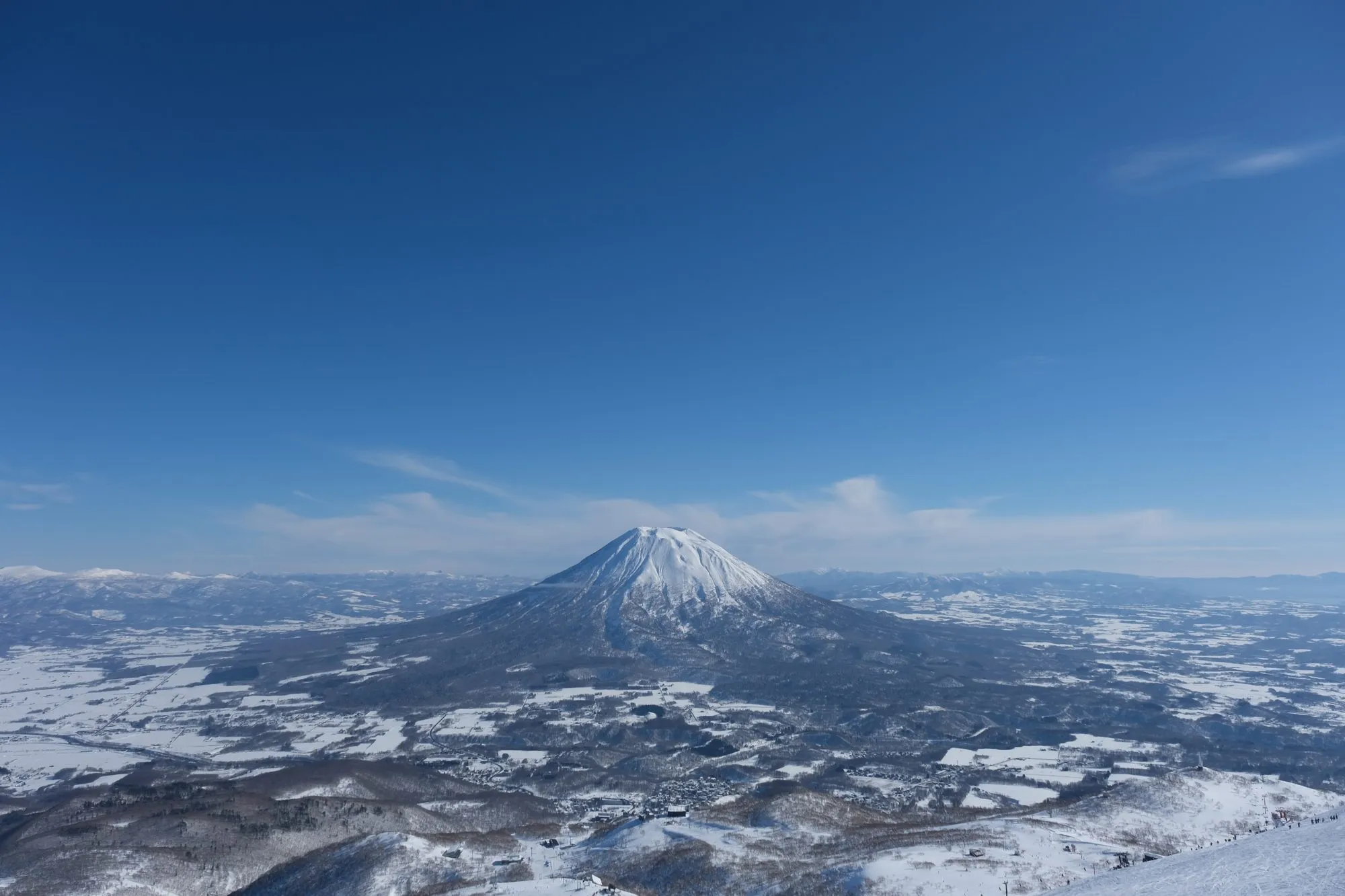
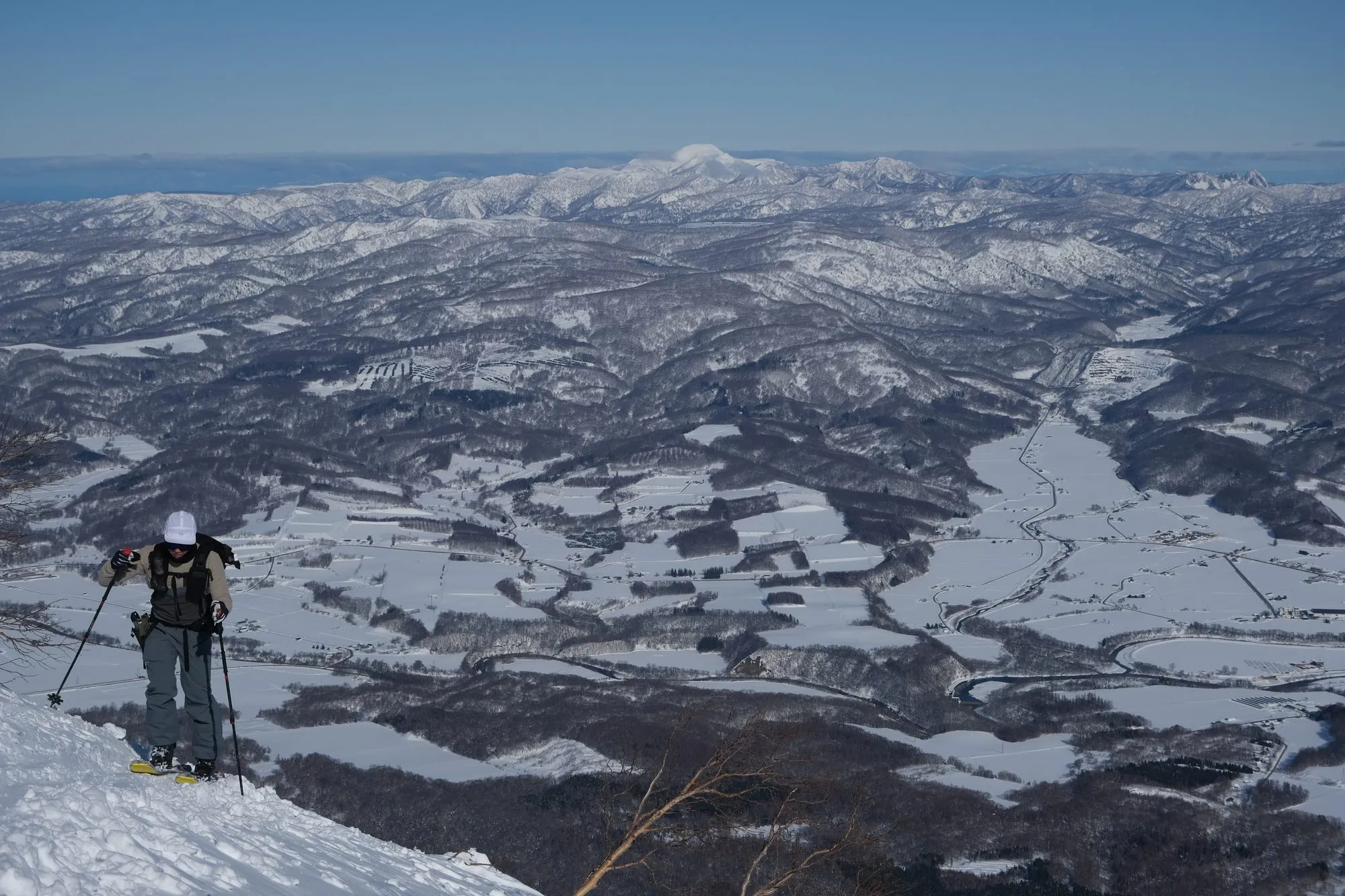
We left around 7 a.m. and didn’t get back until 5. We could have been quicker, but my friends got engaged at the summit, so naturally we spent a while up there taking pictures. The last kilometer to the rim is the crux: it ices up and kicks back to 45 degrees in spots, so we ended up booting it with the skis on our packs. The crater had been baking in the sun the entire climb, so it skied like beautiful spring corn, and by the time we dropped back out the sun had taken the ice off the upper mountain while cold powder stashes were still hiding in the shade.
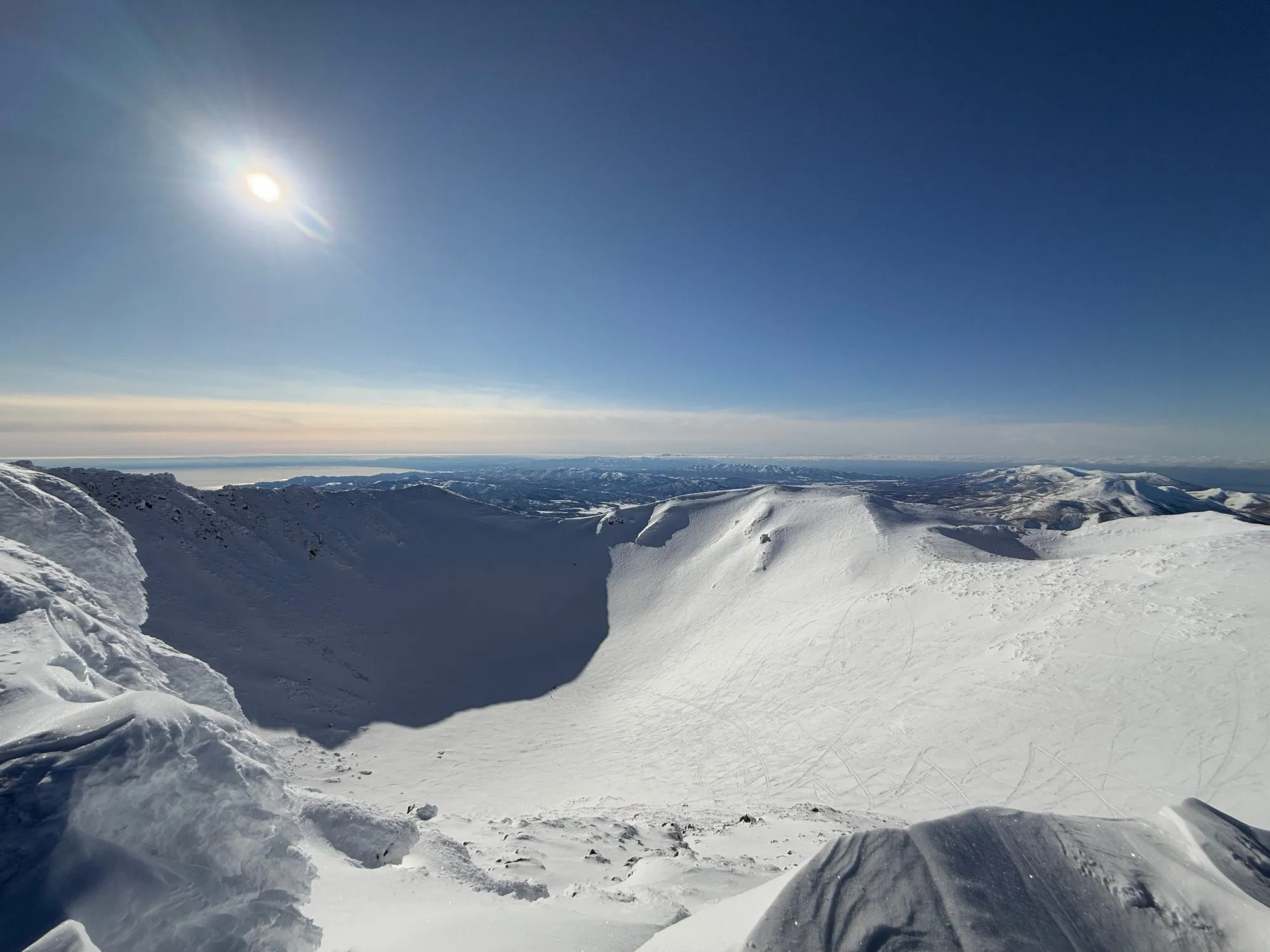
We picked a sunny day on purpose. You are completely exposed up there, and the last thing you want is to be caught in a whiteout. Pick the wrong line off the summit and you can cliff out or get funneled into tight trees, and since the whole mountain is an access point, even a clean run can leave you a long way from where you parked. I somehow had cell service at the top, and the view by itself was worth every step. You can see the ocean from up there. That’s actually how we knew to get moving: we watched a band of cloud start rolling in off the sea, and we skied hard to stay ahead of it, popping out the bottom just as it swept over us, cold and grinning.
If you want the easiest version of Yotei, most people go in spring, March into May, for stable corn and long, calm days. We did it in February inside a clear, stable window, which absolutely works, but only if you’re patient enough to wait for the right day and disciplined enough to bail when it isn’t there. Remember, we purposefully booked two weeks last-minute in a van, so we were never forcing anything and just followed the best weather.
Staying Safe Self-Guided
Going self-guided means every call is yours, so you’d better make good ones. We leaned on the Japan Avalanche Network forecasts, dug our own pits, and built our days around what we found. The big exposed lines like Yotei and the Asahidake bowl only happened on clear, stable days, and when the snowpack or the weather wasn’t right we’d back off and ski trees instead.
Something I had completely backwards before my first trip: I figured the constant deep cold meant a safer snowpack with fewer weak layers. It’s the opposite. Prolonged cold, a shallow early-season base, and clear nights are exactly what build faceting and depth hoar down low and surface hoar up top, and those are the textbook persistent weak layers that kill people. Hokkaido gets them. The Niseko area’s deadly 1998 Haru-no-Taki avalanche ran on that kind of faceted layer. Most days the bigger worry is storm and wind slab, because it’s snowing constantly and the same northwest wind that delivers all that powder is loading it onto the leeward slopes.
The powder itself sets a sneaky trap. On mellow terrain you bog down in it, so you naturally start hunting for steeper lines just to keep your speed, and steeper is exactly where things slide. The deeper it is, the more tempting that gets, and the more your terrain and timing have to be dialed. If you don’t have avalanche training and actually use it, hire a guide for the big objectives. Nobody is coming to patrol you out there, and the weather can flip from a clean window to a 60 mph whiteout while you’re still climbing. I’ve been in that whiteout. Plan for it.
The Food, and Not Being the Tourist They Stop Serving
Once you get out of Niseko and Rusutsu, where the food is western and pricey, it gets cheaper, more local, and outrageously good. Even the konbini food is genuinely great: I lived on 7-Eleven pizza buns and egg sandwiches between towns, though a real restaurant can actually be cheaper.
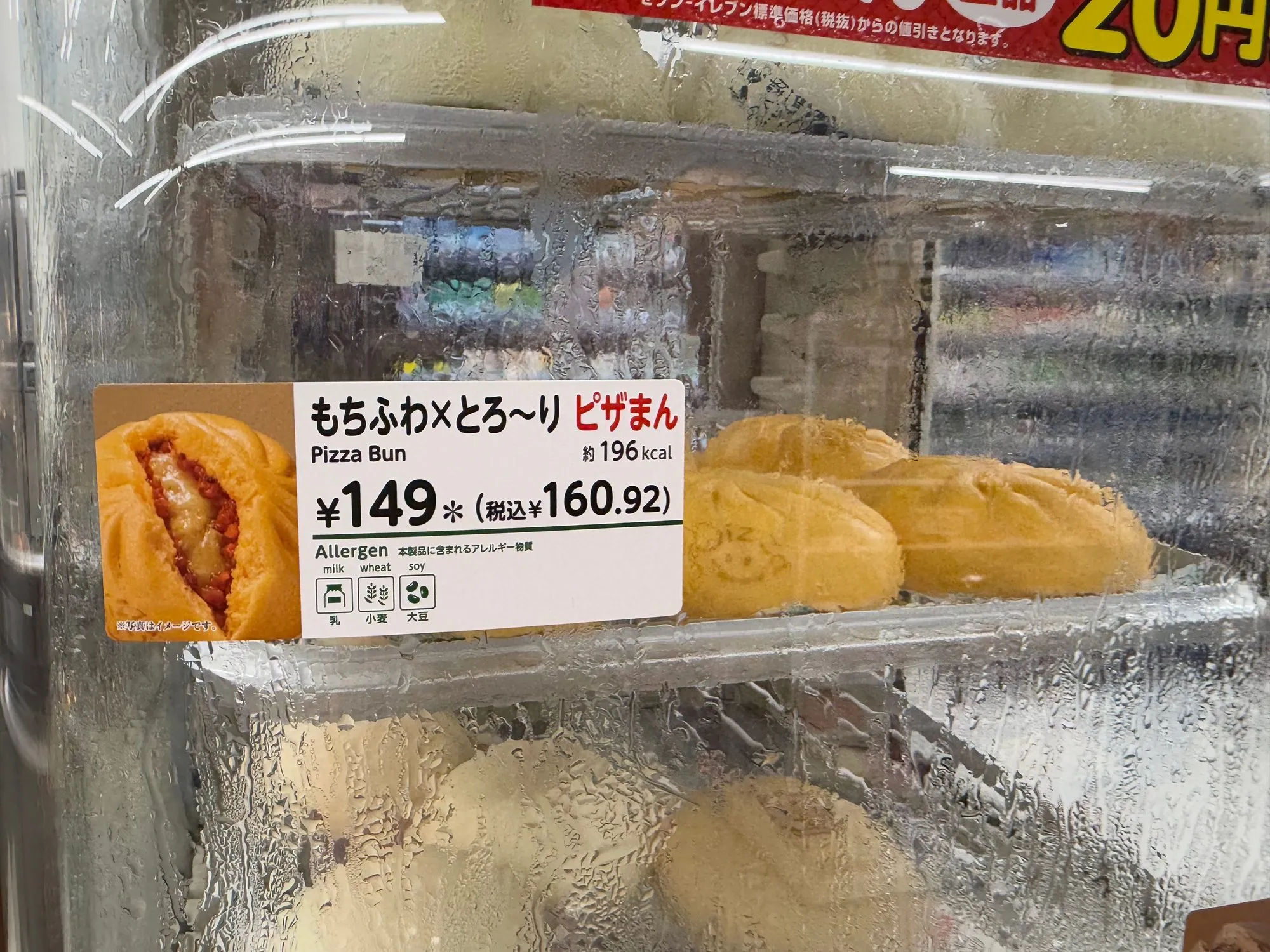
That does come with a responsibility, though. Most of these spots are local families, they don’t speak English, and you don’t speak Japanese, so come prepared. We always had a translation app open, ordered straight off the menu, and never asked for substitutions. If you actually speak Japanese they’ll love you for it. We didn’t, so we kept it simple and respectful.
This matters more than it might sound. There are restaurants out there that have stopped serving foreigners altogether, because too many were slow to order, couldn’t read the menu, tried to change the dishes, and got short with the staff about it. From a local family’s perspective that’s a headache they never signed up for. Don’t be that person. Show up polite, prepared, and easy to feed, and you’ll eat some of the best meals of your life.
Rest Days: Onsen, Lakes, and Ice
You can’t ski every day for two weeks straight, and Hokkaido is a wonderful place to take a day off.
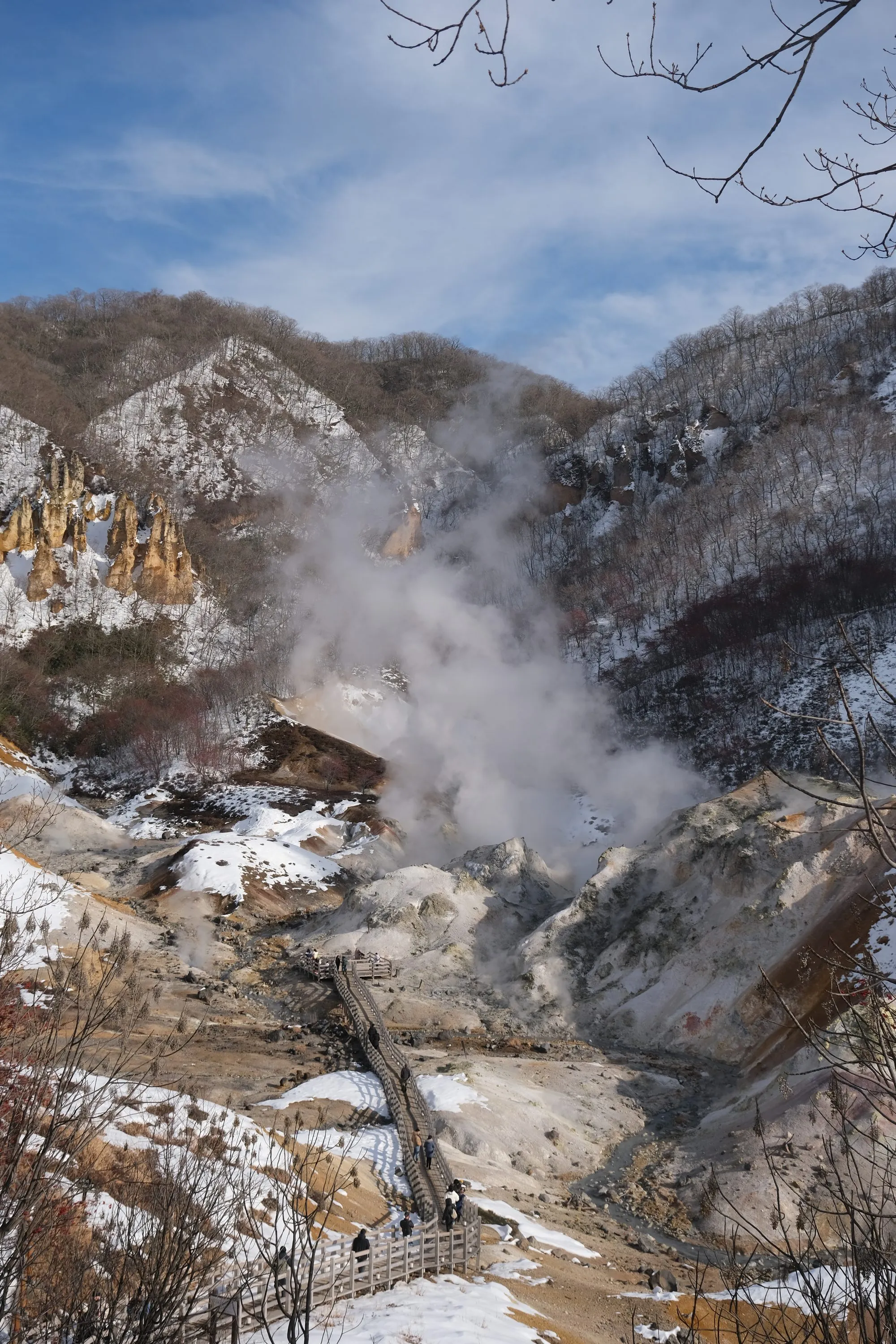
My favorite onsen anywhere is in Noboribetsu, at a hotel called Takimotokan. It has over thirty baths fed by five different kinds of spring water, every one a different temperature, some with textured floors meant to wake up your feet, and a view straight out over the steaming hell valley that feeds the whole place. You can pay to visit for the day at set hours, but stay the night if you can, if only for the absurd breakfast spread of local and western food the next morning.
Lake Toya is worth a stop too, pretty and ringed with little shops, with free onsen foot baths where you can just sit and watch the water. And every winter Lake Shikotsu throws an ice festival with huge carved sculptures, marshmallows and squeaky Hokkaido cheese you roast yourself, and vendors selling fish pulled straight out of the lake and smoked on the spot. The onsen there fills up with locals during the day, so if that’s what you’re after, book a night and you’ll get the early and late guest-only hours.
Getting There and Around
Once you’re there, rent a van. One that fits the whole crew plus skis is surprisingly reasonable, the tolls add up but never painfully, and the freedom is the whole point when the good snow is scattered all over the island. Keep an eye out for Airbnbs that include a car with the booking, which is often the cheapest way to get one. And if you’d rather not drive, the buses are easy and go where you need them, like the regular run up to Tokachidake Onsen.
Getting there is a haul, but a very doable one. I did one trip almost entirely in a single travel day: Seattle to Haneda to Sapporo, then the very last train of the night up to Asahikawa to meet friends. It was tight, I was sprinting through the station with my skis and caught the train with about two minutes to spare, but it works. My whole carry-on for it was one Aer Travel Pack 3, laptop and camera and everything I needed on board, and it slid under every seat. Twenty hours or so door to door, and you can sleep on the planes and the train, eat shockingly good food in the airports, and wake up in icy-cold Asahikawa ready to ski the next morning.
FAQ
When is the best time to ski backcountry in Hokkaido?
February, for the deepest, lightest powder. That's when the Siberian cold and the Sea of Japan snow machine are running hardest, and it's when I went both trips. It's brutally cold (I got frostnip), but the snow is bottomless. If your goal is the Mt. Yotei crater specifically, March into May is the classic window for more stable spring snow and longer days.
Do you need a guide to ski Hokkaido's backcountry?
No. I skied it self-guided both times using online route info, the Japan Avalanche Network forecast, my own snow pits, and careful terrain and weather choices. But that assumes you have real avalanche training and the habit of using it. If you don't, or you're heading for exposed objectives like the Yotei crater or Asahidake's summit, hire a guide. There is no ski patrol out there.
Is backcountry skiing in Hokkaido avalanche-prone?
Yes. The constant cold and shallow early-season snowpack build persistent weak layers like facets, depth hoar, and surface hoar, and the nonstop snow plus northwest wind build storm and wind slabs. The deep powder also pushes you toward steeper slopes just to keep moving, which is where slides happen. Check the Japan Avalanche Network forecast, dig pits, and pick your terrain and your day carefully.
Can you ski Mt. Yotei?
Yes, and skiing into its summit crater is one of the best descents in Japan. It's a 1,898-meter volcano above Niseko. The skin takes most of a day and the last stretch to the rim can ice up to 45 degrees, so be ready to boot it. You're completely exposed up top, so only go in a clear, stable weather window.
Where should you ski in Hokkaido besides Niseko?
Go north. My favorites were Asahidake (the highest peak in Hokkaido, with skiable volcanic steam vents), the Tokachidake area near Furano (steeper, secluded, with the Ryounkaku onsen at the base), and Pippu, a tiny community hill with twenty-dollar tickets and the best home cooking of the trip. Niseko and Rusutsu get the crowds. Everywhere else you get the snow to yourself.
Do you need a car in Hokkaido?
It helps a lot. The good snow is spread across the island, and a rental van that fits everyone plus skis is reasonable even with tolls. Airbnbs that bundle a car are often the cheapest way to get one. If you'd rather not drive, the bus network is easy and reaches the trailheads, like the regular run up to Tokachidake Onsen.